Author / dandowlingblog

Measured Lives 2
Measured Lives 2
Oil on Canvas
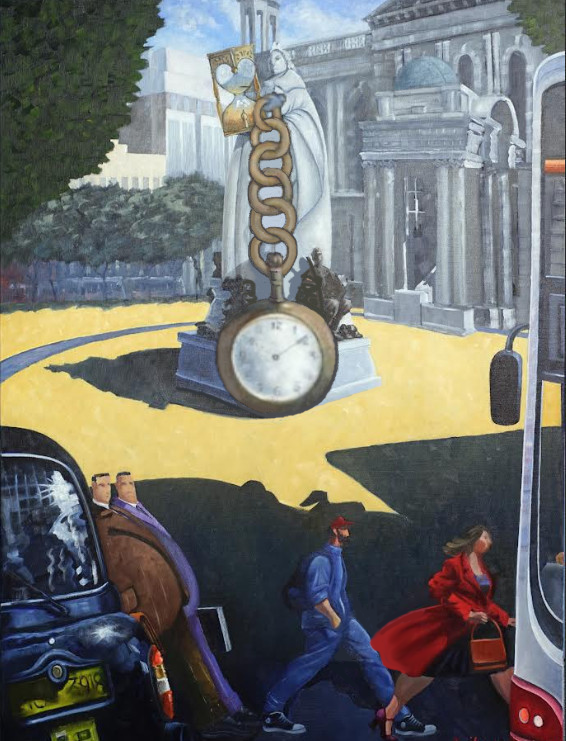
In Measured Lives 2, I explore how time shapes our existence, governing our movements, routines and relationships with one another.
The painting depicts a familiar city scene in which people hurry through their daily lives, seemingly oblivious to those around them. Above them, a monumental clock and hourglass preside over the square, silent reminders of the relentless passage of time and the extent to which our lives are dictated by schedules, deadlines and obligations.
The composition deliberately challenges conventional perspective. The expansive yellow square contrasts with the compressed foreground, creating a dynamic, theatrical space in which the figures appear almost propelled towards their destinations. Their exaggerated movements and slightly distorted proportions introduce an element of humour while suggesting the pressures of modern life.
The abstract shadows play an equally important role. Sweeping across the square and pavement, they establish a rhythm that connects the figures to their surroundings. Their exaggerated forms suggest the invisible forces that direct our movements, while the contrast between light and darkness reinforces the passing of time.
Ultimately, Measured Lives invites us to reflect on a familiar contradiction: in our constant pursuit of getting and spending, we become so preoccupied with measuring time that we risk forgetting to experience it.
Both Measured Lives (see previous blog) and Measured Lives 2 will be shown at the 145th Royal Ulster Academy Exhibition, which will open in the Ulster Museum, Botanic Gardens, Belfast on Sunday 18th October 2026, admission free.
“Measured Lives”
Measured Lives 1
Oil on canvas
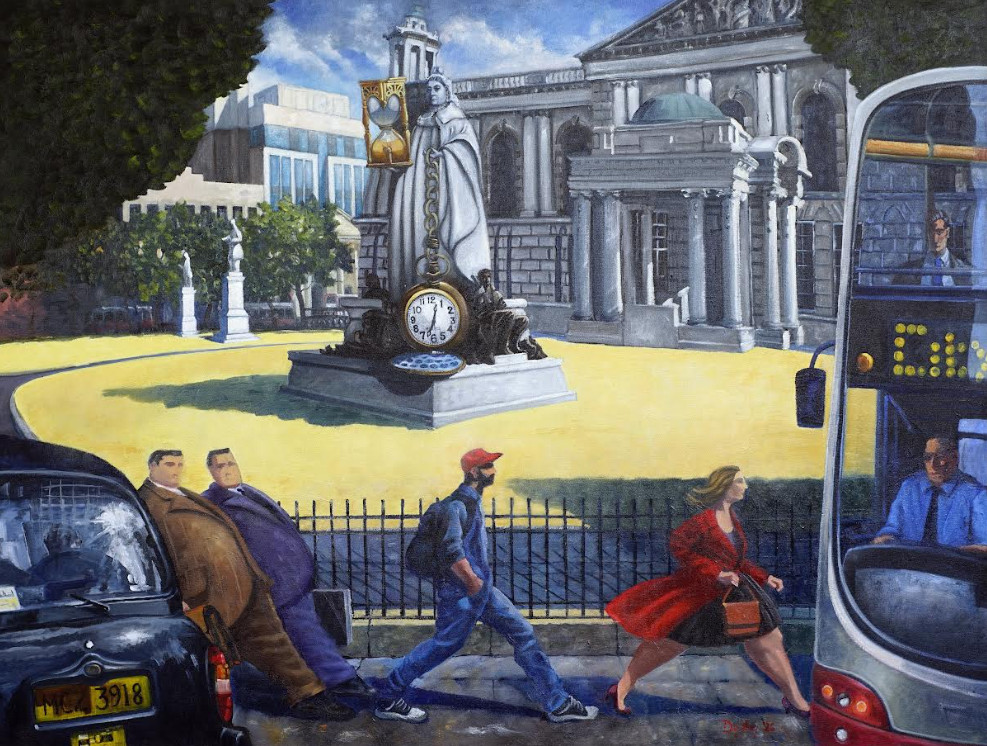
In Measured Lives 1, Dan Dowling explores the uneasy relationship between time, routine, and modern urban life. Set in the centre of a busy city square, the painting presents a stream of figures moving through their daily rituals beneath the looming presence of a monumental clock and hourglass statue. Time is not merely present in the painting — it dominates it.
The commuters appear disconnected from one another, each absorbed in private thoughts and obligations. The businessmen lean heavily as though burdened by the weight of routine, while the central worker strides forward with purpose, and the woman in the red coat moves urgently toward the waiting bus. Around them, the city itself feels strangely theatrical: architecture flattened into a symbolic backdrop rather than a realistic setting.
The clock monument acts as both observer and warning. Its exaggerated scale and central position suggest the extent to which modern life is governed by schedules, deadlines, and the relentless passage of time. Yet despite this pressure, the painting retains moments of humour and humanity, particularly in the exaggerated forms and slightly surreal atmosphere.
Measured Lives 1 reflects on how contemporary society measures success, productivity, and even identity through time itself — often at the expense of genuine human connection.
Measured Lives 1 is currently on exhibition at the 196th Royal Hibernian Academy Annual Exhibition, Ely Place, Dublin.
“The Way We Live Today”
The Way We Live Today
Oil on canvas, 76 x 102 cm
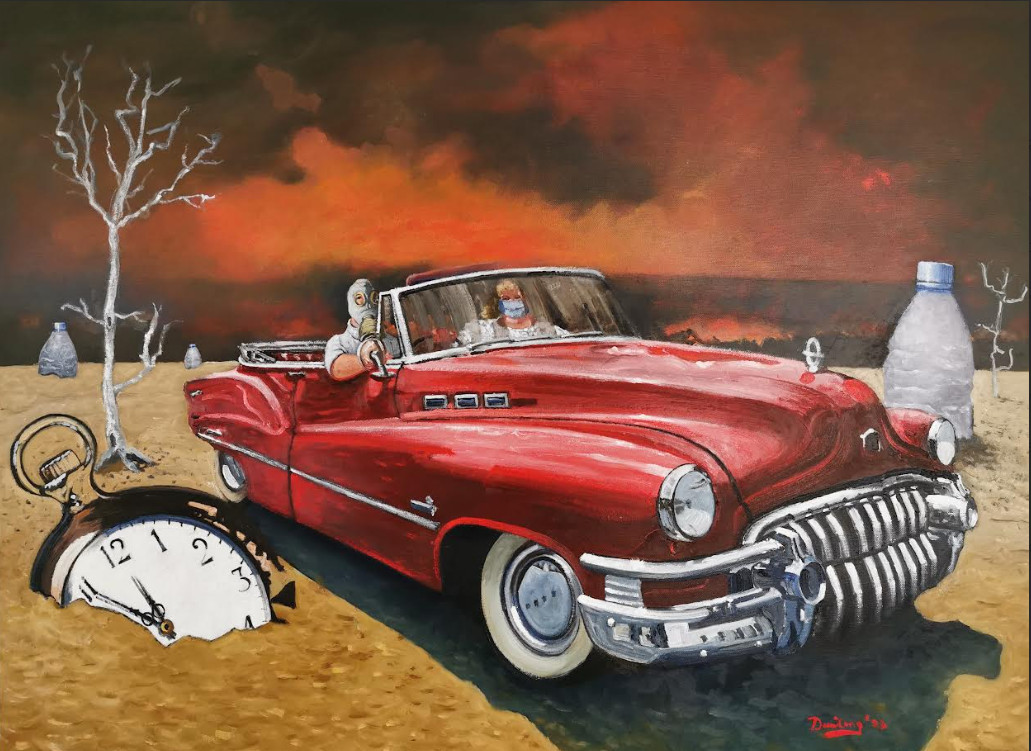
In The Way We Live Today, Dan Dowling presents a darkly satirical vision of a future shaped by environmental neglect and collective denial. The painting imagines a dystopian landscape in which humanity continues to squander the planet’s resources while offering little more than token concern for global warming and ecological collapse.
The familiar blue sky has disappeared beneath an inferno of smoke and fire. The earth itself has been reduced to a scorched, ash-coloured wasteland where nature has all but vanished. The few remaining trees stand lifeless and skeletal, replaced by towering discarded plastic bottles that rise like monuments to consumer culture and environmental excess.
Dominating the foreground is a corroded pocket watch, half-buried in the earth, its hands edging relentlessly toward midnight — a clear symbol of time running out. Yet despite the surrounding devastation, a couple continue to cruise casually through the scene in a gleaming red gas-guzzling car. Their calm indifference introduces both irony and humour, while also suggesting something deeply human: our extraordinary ability to normalise crisis and continue with everyday life even as the world changes irreversibly around us.
The painting balances absurdity, warning, and resilience in equal measure.
“A Ship of Fools”
A Ship of Fools
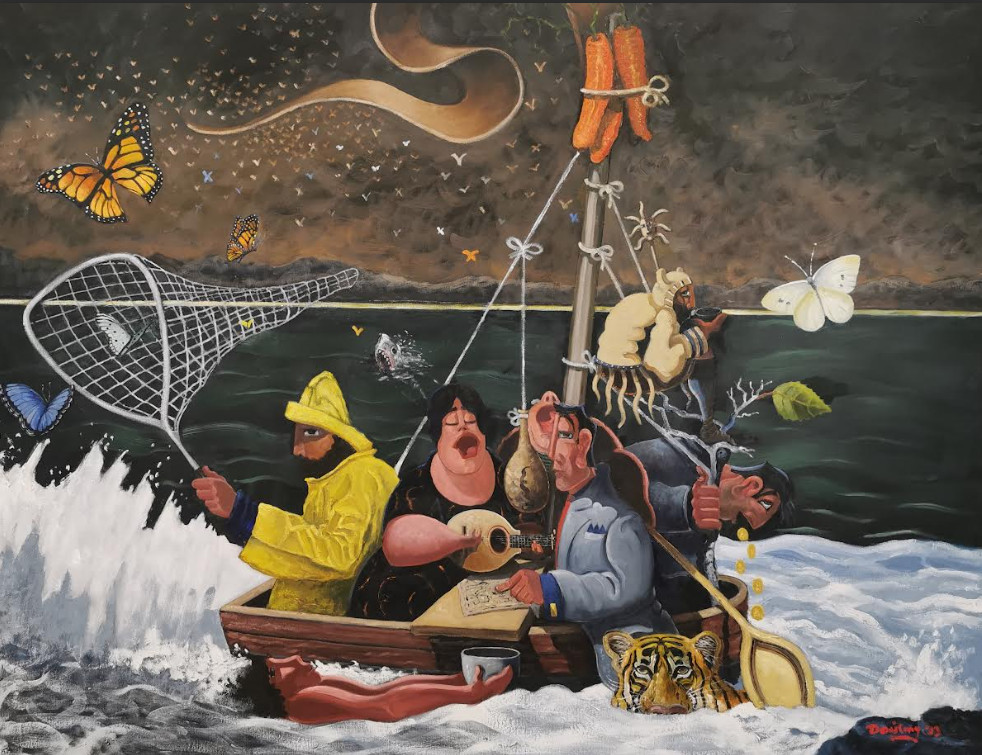
In A Ship of Fools, I revisit the spirit of Hieronymus Bosch and bring it into the turbulence of the 21st century. The painting presents a fragile vessel adrift in dark waters, crowded with figures absorbed in their own distractions, blind to the dangers gathering around them.
The work reflects a widening divide between those who have and those who do not. In the foreground, a hand emerges from the water—“spare change, guv?”—a quiet but urgent plea that goes unanswered. Above, one figure clutches the last remaining tree while vomiting money, a futile gesture that speaks to both excess and loss. Nearby, another attempts to rescue the natural world with a butterfly net—an act as hopeful as it is absurd.
The presence of the tiger, inspired by Life of Pi, introduces a psychological tension, a reminder of the thin line between survival and chaos. Meanwhile, the figures continue to sing, guided by a fool who sees nothing, as the boat drifts inevitably toward the rocks.
The painting invites reflection on a world where urgency is ignored, and where distraction, privilege, and denial carry us steadily forward—together—toward an uncertain fate.
“In Queen Mary’s Gardens”
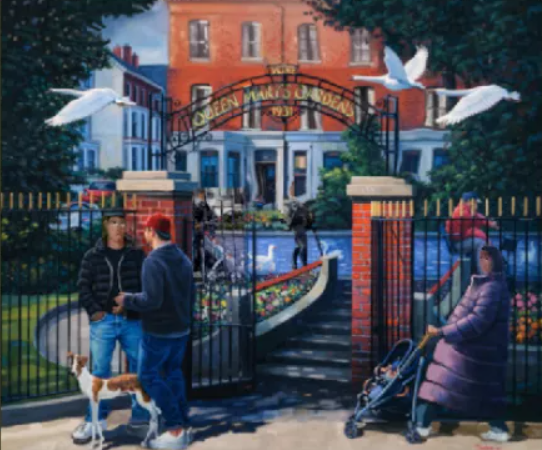
“In Queen Mary’s Gardens”
Oil on Canvas
In Queen Mary’s Gardens captures a familiar North Belfast setting while quietly unsettling it. The wrought-iron gates, the red-brick building beyond, and the gentle slope toward the water all suggest a place rooted in memory. Yet the figures inhabiting the space feel slightly dislocated, as if each exists in their own psychological lane.
A man pauses mid-conversation while his dog stands alert, caught between movement and stillness. Nearby, a woman leans into a pram, her posture heavy, almost contemplative. Behind them, figures drift along the path, neither fully connected nor entirely separate. Overhead, swans cut through the air with a calm authority, echoing the park’s well-known wildlife while also introducing a sense of quiet surveillance.
What emerges is a rhythm of everyday life—people passing, pausing, occupying shared space—yet not fully engaging. The painting subtly reflects the evolving social fabric of the area. Different presences, different histories, now intersect in a single, ordinary moment. This is not presented as conflict, but as a gentle, unresolved layering.
Dowling’s treatment resists nostalgia. Instead, the familiar becomes slightly estranged, suggesting that places, like people, are always in transition. The garden becomes both a local landmark and a broader metaphor for shifting identities in a changing world.
“Big Daddy’s Funeral”
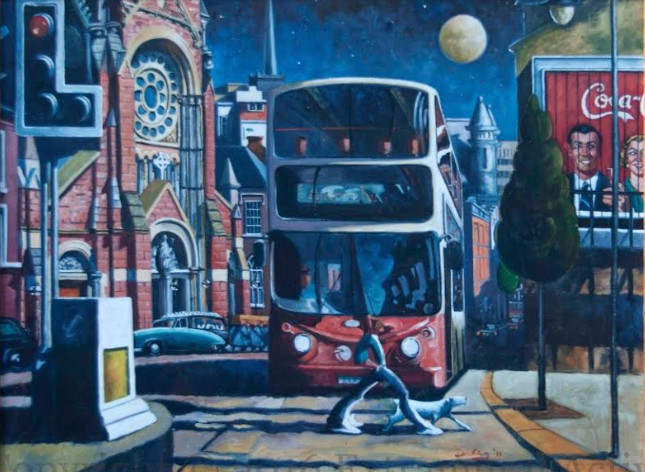
Dan Dowling
Big Daddy’s Funeral
Oil on canvas
Dan Dowling (b. 1954, Belfast) is an Irish painter whose work engages with the dynamics of contemporary life through figurative imagery rooted in observation and memory. Educated at St Mary’s Grammar School, Belfast, he has developed a practice informed by his native city, his travels in Spain, and long-distance walking, including the Camino de Santiago. He exhibits regularly at the Royal Ulster Academy and the Royal Hibernian Academy annual exhibitions, and has served as President of the Royal Ulster Academy of Arts since 2021.
Big Daddy’s Funeral is an early work that reflects Dowling’s enduring interest in the passage of time and the structures that shape everyday experience. Set on Donegall Street in Belfast, the painting presents a constructed urban scene in which observed detail is interwoven with symbolic suggestion. The presence of St Patrick’s Church and a passing funeral introduces a quiet meditation on mortality, while a double-decker bus, populated by uniform, anonymous figures, evokes the repetitive rhythms of working life. In the foreground, two loosely rendered figures and a dog suggest a contrasting sense of spontaneity and freedom. A large commercial advertisement further anchors the scene within a contemporary social and economic context.
Balancing description with implication, the work invites reflection on the tensions between individual agency and collective routine, and on the cyclical nature of daily life.
The Art of Stopping the World
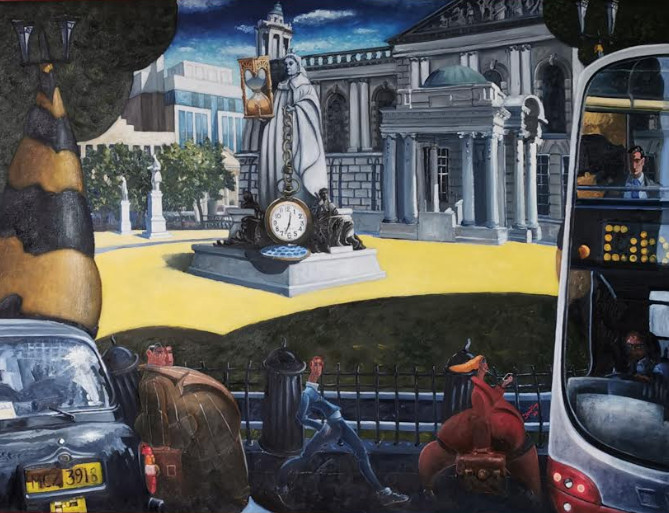
This is a new painting called “The Art of Stopping the World”. It is oil on canvas, 36X48 inches. The title comes from a recent clash with, I’m not sure if you could call it a reading of, Carlos Castaneda’s mysterious “Journey to Ixtlan”. I have used my favourite backdrop Belfast City Centre, City Hall, and employed Queen Victoria to control time with a right royal sized pocket watch and hourglass (maybe that’s another story).
The painting talks about our innate ability as human beings to fill our lives with the other, anything rather than confronting ourselves, our reality, whatever that is. The businessmen fatcats, totally consumed with their excessive getting and spending, are mutating into a two-headed hydra. The student with his headphones is immersed in the world of technology and the secretary finds her refuge in endless work. Each life dances to the tick of the clock, to the trickle of sand into the hourglass.
Many peoples lives are driven by their own personal demons. Could you imagine life as an endless bus journey driven by a clearly demonic driver, forever pressing the bell but never able or maybe never really wanting to get off? (Ditto the black taxi). Castaneda’s idea is that we stop our lives for just a moment, in a mindfulness way, to try to get a glimpse of our own reality.
I started this painting some time ago. While I was working on it a pandemic, the Coronavirus, has stopped the world and all our lives. I can only hope that something positive, no matter how small, will come out of what can only be described as a nightmare and that we can emerge as a surely battered but better society.
A Belfast Walk-Travelling in Time
This is an easy 7 kilometres walk through Belfast, visiting some of the oldest streets as well as one of the newest locations in the city, a true journey in time. For a map and more information go to https://www.wikiloc.com/hiking-trails/botanic-joys-entry-the-mac-and-the-crown-43840385
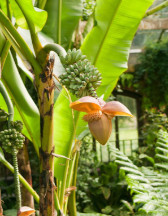
We started our time travelling at the Tropical Ravine in Botanic Gardens near Queen’s University. The Tropical Ravine is a celebration of our Victorian forefather’s ingenuity, their lust for travel, scientific research and collating their world. It has recently been refurbished back to better than pristine condition and is well worth a visit.
 We continued our walk down Botanic Avenue and into the centre of the city to Ann Street in order to explore the entries running from Ann Street to High Street. These alleyways dating back to the 17th century are where the town of Belfast was born and first laid out. They serviced a dense residential and commercial development. We choose to walk along Joy’s Entry, originally named after Francis Joy the founder of the News Letter the oldest English language newspaper. However, the entry is now a celebration of the life and times of his grandson Henry Joy McCracken, the acknowledged hero of the 1798 rebellion.
At the end of the entry, we turned left into High Street to shortly view the site of the gallows where Henry Joy was hanged. The gallows at that time was located further along Castle Place close to what is now the entrance to the Bank Buildings. However, Henry was given special attention, he was a freemason as were many of his fellow revolutionaries. The freemasons met in the Market House at the corner of High Street and Cornmarket. His gallows was erected in High Street, outside the windows of the Market House as an example to all.
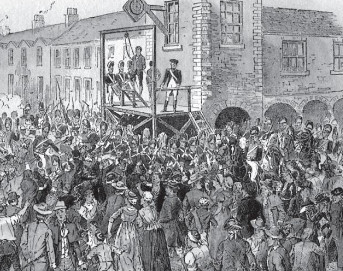
Execution of Henry Joy McCracken, 17th July 1798, he was 30 years of age
From this rather gruesome location, we crossed to Wine cellar Entry, home to White’s Tavern, a pub founded in 1630. At the end of Wine Cellar Entry, we turned right into Rosemary Street and continued across Bridge Street and into Waring Street to find, on the left, what was one of the most notorious, crime-ridden and dangerous locations in Belfast in the 19th century, Warehouse Lane. This now unprepossessing alleyway,
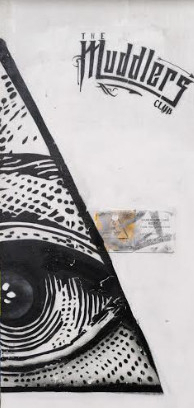
which was once sheltered the very poorest of society is now home to a Michelin star restaurant, the Muddlers Club. The name is a reference to the United Irish Men who held their secret meetings in the locality and the surrounding graffiti hints at masonic connections.
At the end of Warehouse Lane, we turned left into Exchange Place and back into Donegall Street. Here, at the entrance to Exchange Place, is a ‘plain’ looking building with a very important history.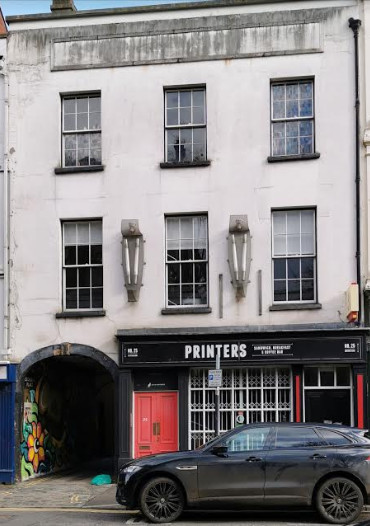
This was Belfast’s first maternity hospital established in 1794 due to the efforts of a small group of philanthropists. The aim of the hospital was to aid labouring ‘indigent females’ by providing accommodation, food and medical assistance during childbirth. https://www.qub.ac.uk/sites/irishhistorylive/IrishHistoryResources/Shortarticlesandencyclopaediaentries/Encyclopaedia/LengthyEntries/TheBelfastLying-inHospital1794-1903byLisaLavery/
From here we cut through Commercial Court past the fabulous Duke of York pub, turned left into Hill Street and then straight across into Exchange Street, formerly Robert Street, which runs between the back of St. Anne’s Cathedral and the new St. Anne’s Square. Belfast became a city by royal charter in 1888. Robert Street, then, was a notorious crime and poverty-ridden area and only confirmed its grim reputation by becoming the site of the first murder in the new city. The bloody deed took place just opposite the main entrance to St. Anne’s Square and for all the gory details go to “The Darker Side of Belfast’s History” by Joe Baker.
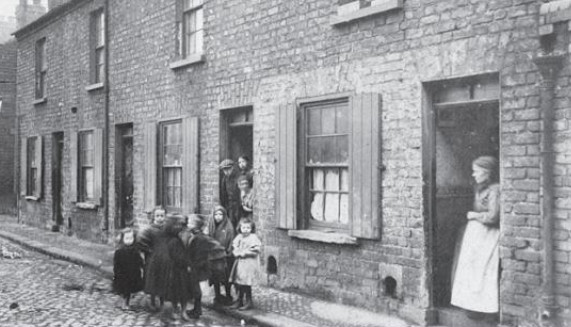
The former Robert Street, now Exchange Street, at the entrance to what is now St. Anne’s Square but then the site of bloody murder.
For some relief from murder most foul, we turned our steps to one of Belfast’s newest buildings, the MAC to be inspired not only by the interior of the building but also by the current exhibition Mark Garry’s “Songs and the Soil”.
And so ended our time-travelling through what was only a soupcon of Belfast’s rich and often dark history. But time-travelling is thirsty work and to round off the day, we returned to the fabulous Duke of York for light libations.
Welcome to Puppet Town
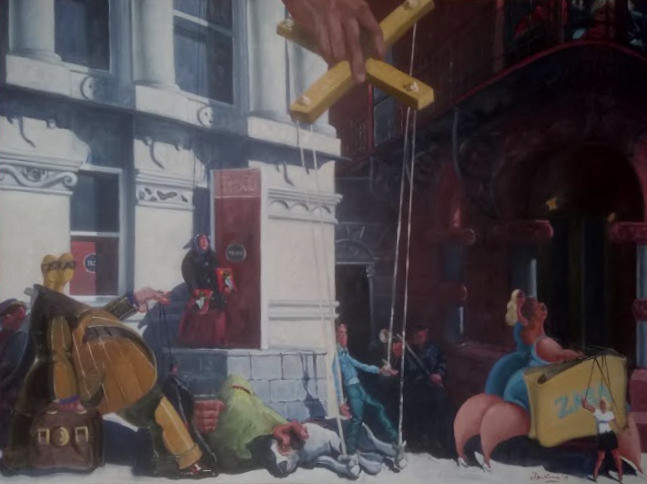
“Welcome to Puppet Town”, Oil on Canvas 36X48 inches
We live in the anthesis of interesting times, we live in strange times. It’s hard to say who is in control, who exactly is pulling the strings if anyone. Hence my latest painting “Welcome to Puppet Town”.
The backdrop is again Belfast city centre, with Tesco Metro, a multinational and the rich and private Reform Club living comfortably, cheek by jowl. A cast of characters passes by, from faceless men to ladies that lunch, controlling their own puppets. A great hand descends from above, the hand of the Grand Puppet Master, and a helpless puppet dances to the rhythm of life.
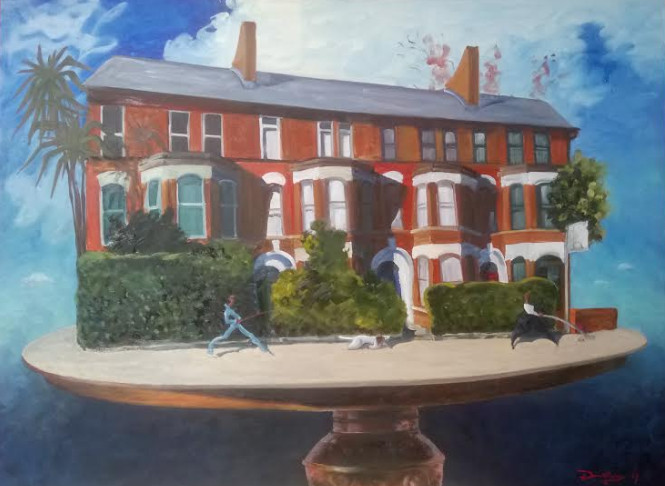
“In Our Street”, oil on canvas 36X48 inches
This second painting “In Our Street” plays with concepts of reality. It shows some houses which exist on the Antrim Road, Belfast at Chichester and a very beautiful table. The table also exists and normally lives inside one of the houses, however in a parallel universe who knows.
Both paintings will be exhibited at the Royal Ulster Academy Exhibition in the Ulster Museum, Stranmillis from October 2019.

