“Measured Lives”

Measured Lives 1
Oil on canvas

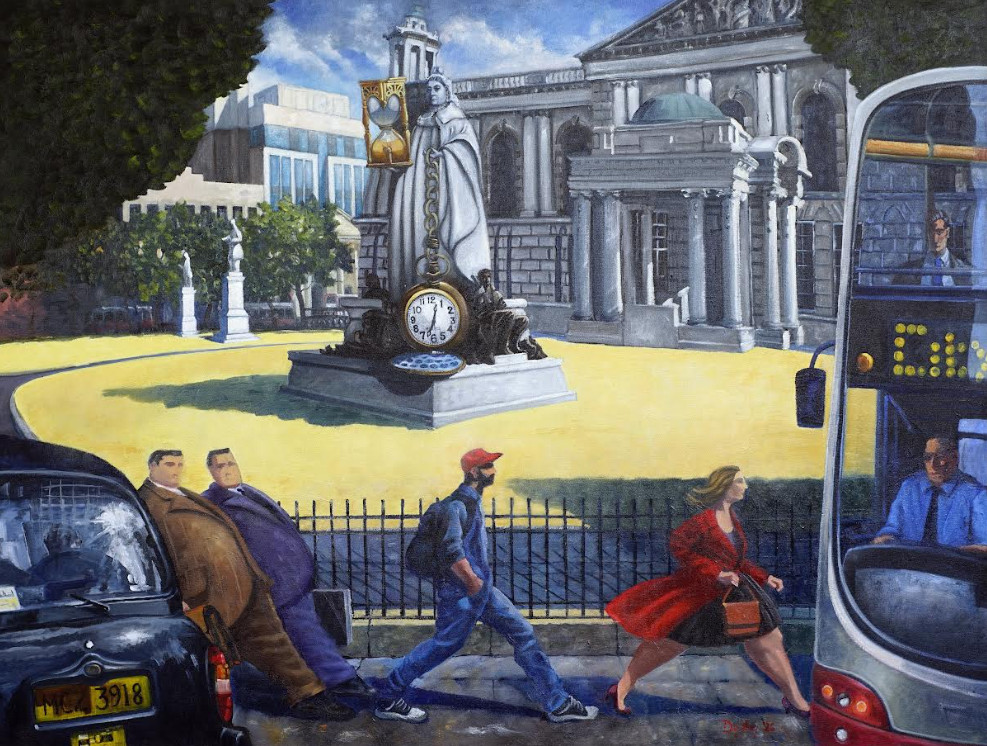
In Measured Lives 1, Dan Dowling explores the uneasy relationship between time, routine, and modern urban life. Set in the centre of a busy city square, the painting presents a stream of figures moving through their daily rituals beneath the looming presence of a monumental clock and hourglass statue. Time is not merely present in the painting — it dominates it.

The commuters appear disconnected from one another, each absorbed in private thoughts and obligations. The businessmen lean heavily as though burdened by the weight of routine, while the central worker strides forward with purpose, and the woman in the red coat moves urgently toward the waiting bus. Around them, the city itself feels strangely theatrical: architecture flattened into a symbolic backdrop rather than a realistic setting.

The clock monument acts as both observer and warning. Its exaggerated scale and central position suggest the extent to which modern life is governed by schedules, deadlines, and the relentless passage of time. Yet despite this pressure, the painting retains moments of humour and humanity, particularly in the exaggerated forms and slightly surreal atmosphere.

Measured Lives 1 reflects on how contemporary society measures success, productivity, and even identity through time itself — often at the expense of genuine human connection.

Measured Lives 1 is currently on exhibition at the 196th Royal Hibernian Academy Annual Exhibition, Ely Place, Dublin.
“The Way We Live Today”

The Way We Live Today
Oil on canvas, 76 x 102 cm

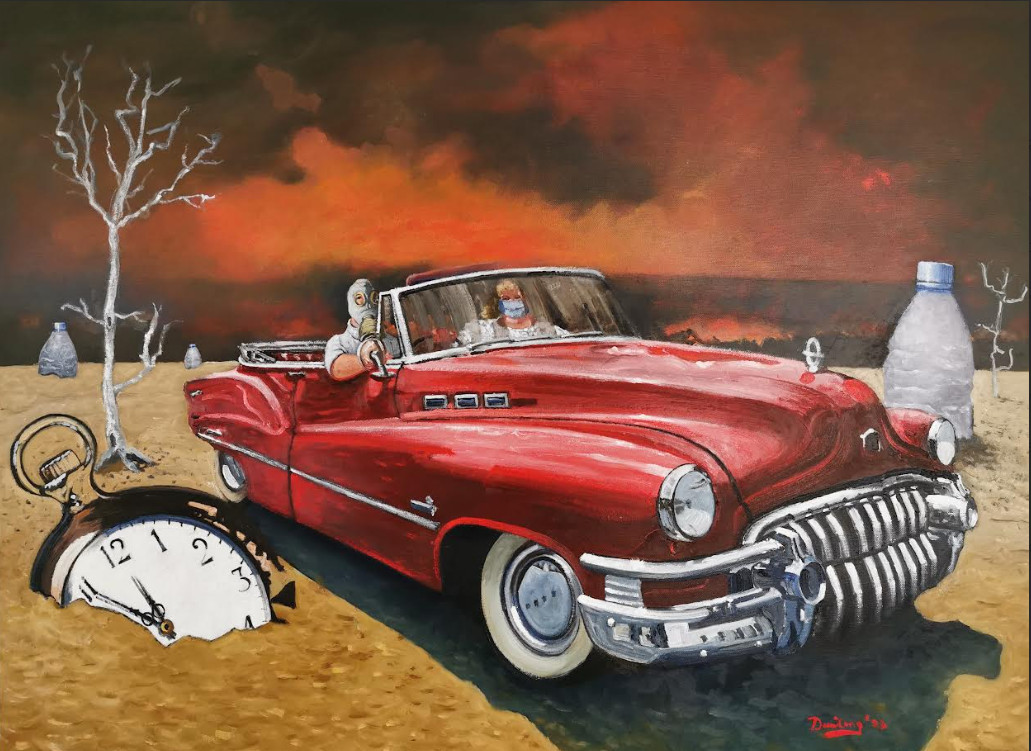
In The Way We Live Today, Dan Dowling presents a darkly satirical vision of a future shaped by environmental neglect and collective denial. The painting imagines a dystopian landscape in which humanity continues to squander the planet’s resources while offering little more than token concern for global warming and ecological collapse.

The familiar blue sky has disappeared beneath an inferno of smoke and fire. The earth itself has been reduced to a scorched, ash-coloured wasteland where nature has all but vanished. The few remaining trees stand lifeless and skeletal, replaced by towering discarded plastic bottles that rise like monuments to consumer culture and environmental excess.

Dominating the foreground is a corroded pocket watch, half-buried in the earth, its hands edging relentlessly toward midnight — a clear symbol of time running out. Yet despite the surrounding devastation, a couple continue to cruise casually through the scene in a gleaming red gas-guzzling car. Their calm indifference introduces both irony and humour, while also suggesting something deeply human: our extraordinary ability to normalise crisis and continue with everyday life even as the world changes irreversibly around us.

The painting balances absurdity, warning, and resilience in equal measure.

“A Ship of Fools”


A Ship of Fools

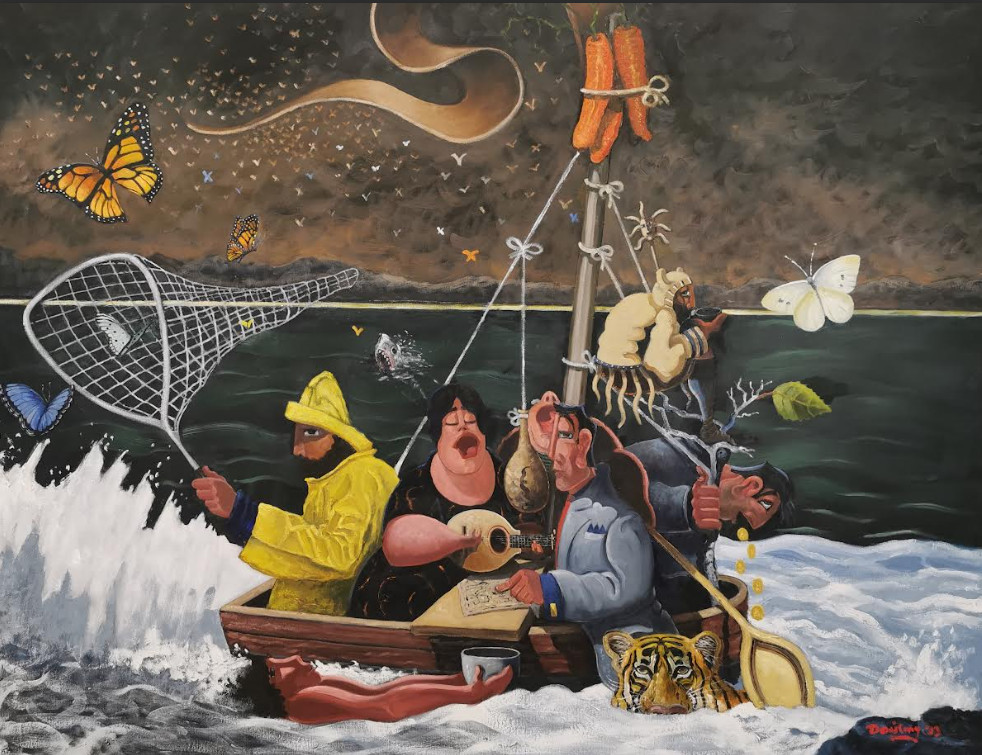
In A Ship of Fools, I revisit the spirit of Hieronymus Bosch and bring it into the turbulence of the 21st century. The painting presents a fragile vessel adrift in dark waters, crowded with figures absorbed in their own distractions, blind to the dangers gathering around them.

The work reflects a widening divide between those who have and those who do not. In the foreground, a hand emerges from the water—“spare change, guv?”—a quiet but urgent plea that goes unanswered. Above, one figure clutches the last remaining tree while vomiting money, a futile gesture that speaks to both excess and loss. Nearby, another attempts to rescue the natural world with a butterfly net—an act as hopeful as it is absurd.

The presence of the tiger, inspired by Life of Pi, introduces a psychological tension, a reminder of the thin line between survival and chaos. Meanwhile, the figures continue to sing, guided by a fool who sees nothing, as the boat drifts inevitably toward the rocks.

The painting invites reflection on a world where urgency is ignored, and where distraction, privilege, and denial carry us steadily forward—together—toward an uncertain fate.