Category / Uncategorized
Camino de Santiago – Via de Plata (Granja – Faramontanos de Tábara – Tábara)
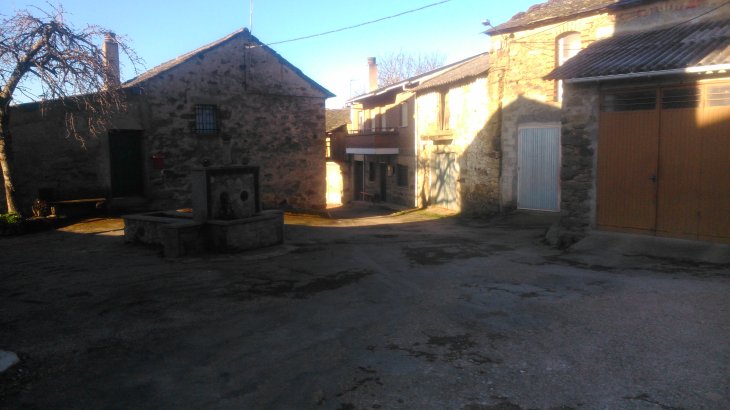
Shortly after Granja, Victor and I had to part company. He was walking north to Astorga, then to the French border, and then through France to his parents farm, in the far north. It would take him another two months, but at least he would arrive in the summer. I was continuing to follow the Portuguese border, on the Camino Sanabres, now westward to Ourense, and then north to Santiago.
We left Granja early, and, as was Victor’s custom, we greeted the sun as it rose over the horizon. We parted company at a bridge called Puente Quintos. I was very sorry to see him go, as we had become very good friends, and he had taught me a lot about the Camino.
I reached Tábara early afternoon and stayed at the excellent alberge with the the hospitalario, José.
.
Camino de Santiago – Via de Plata (Granja de Moreruela – Camino Sanabres)
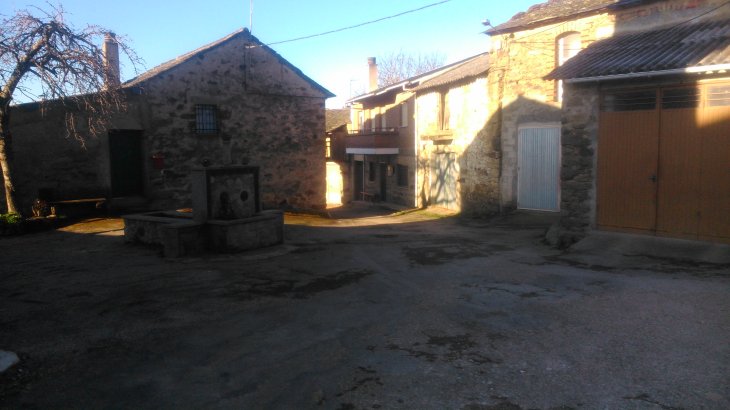
Riego de Camino is a small village with an alberge and a bar. In common with most villages in Spain, it is dying on its feet. For economic reasons, the younger generation are deserting the countryside in favour of the cities, and houses quickly fall into ruin.
Granja, on the otherhand, is more substantial, with a good alberge (no kitchen), a shop and a bar .
Camino de Santiago – Via de Plata (Zamora… Cont’d)
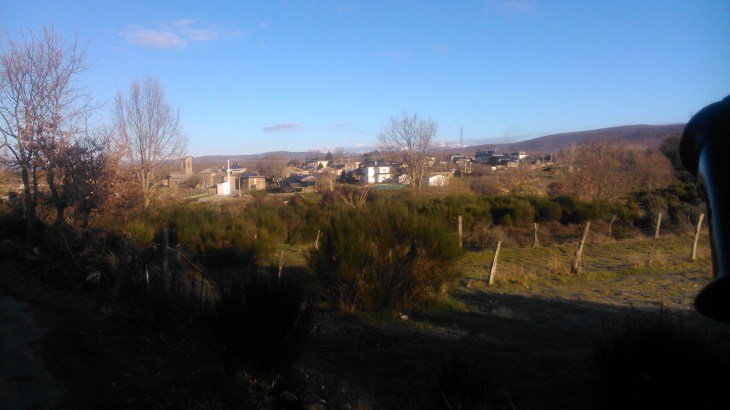
Spending the morning with Marcelino in his water tank, was one of the highlights of this Camino. As Victor and I trudged through open countryside, under a massive blue sky, the conversation turned to states of existence, parallel lives, and Victor’s favourite subject, the ‘Dawning of the Age of Aquarius ‘.
Before we reached Riego, we flopped down on a grassy bank. I suddenly realised that the chatter of conversation in my head, that the left hand brain both needs to, and is very fond of producimg, had stopped. Apart from the sounds of nature, there was perfect peace and perfect silence.
This was a new land to me. It had taken three weeks of hard walking to get here, but it was worth it. It felt like being nowhere and everywhere at the same time.
I assumed that Victor lived here all the time, or somewhere close by. After walking for six months across France and Spain, where else would he live?
Here I was, for the first time in my life, living in the moment. I lay back in that vast landscape, under an immense blue sky. I could almost feel the earth turning on it’s axis.
Camino de Santiago – Via de Plata (Zamora cont’d)
In Marcelino ‘s water tank, we breakfasted on bananas, and smoked an interesting herbal mix, while he played the banjolin. He is a great believer in the power of music to lift the human spirit to higher and higher levels. He simply plucked individual notes, getting faster and slower, louder and softer. The ecoustics in the water tank were excellent. He stopped, occasionally, to pass us books on the Camino, the Templars, and ancient magic. It was with reluctance that we left him, to continue our walk to Granja ….cont’d
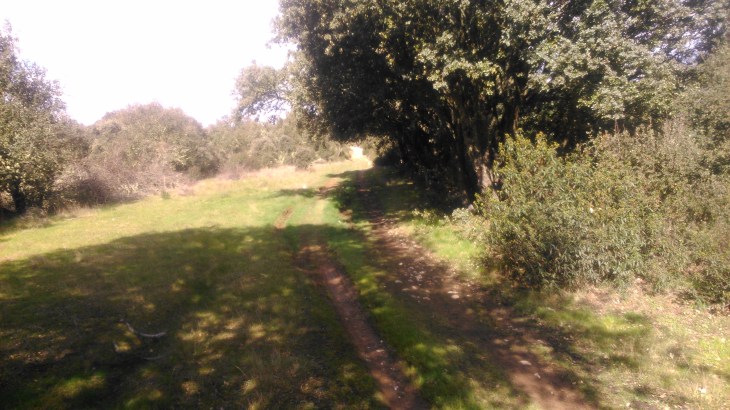
Camino de Santiago – Via de la Plata (Zamora – Riego del Camino-Granga de Moreruela 37 kilometres)
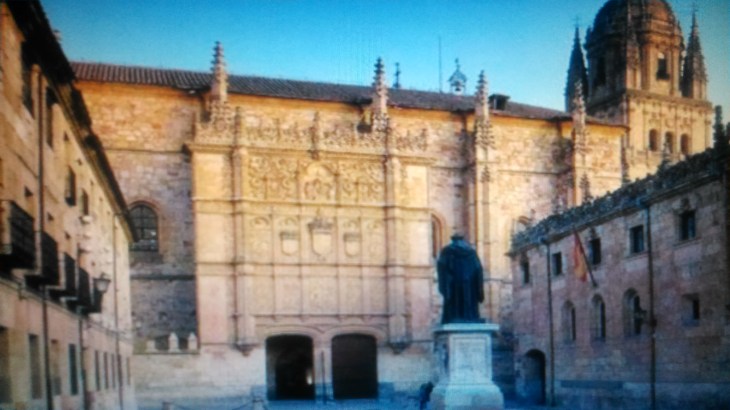
Before leaving Zamora, we had promised to visit Marcelino in his home, an empty water tank. A water tank in Spain, is a circular concrete structure, about the size of an average living room. He has no water or electricity, but has permission to live there. Marcelino is a fascinating character, and the chance to share more of his knowledge and his life was too enticing.
It was a beautiful, sunny morning and we made our way back across the Roman bridge to the water tank. Marcelino greeted us warmly. There was no door, we just slide in through a hole in the wall…….cont’d.
.
Camino de Santiago-Via de Plata (El Cubo de Vino-Zamora)
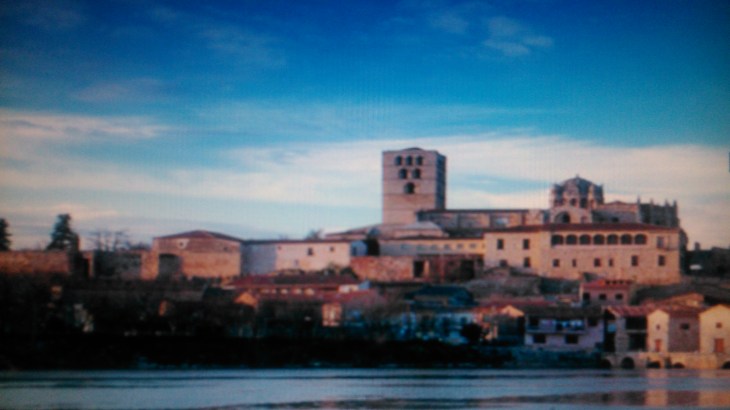
We left El Cubo de Vino in a heavy, early morning, frost, but by the time we were crossing the Roman bridge in Zamora, it had warmed up to a lovely, sunny day.
Zamora is a wonderful old city, crammed with Romanesque churches. The alberge is just up the hill from the Roman bridge, and is clean, warm, and comfortable.
Victor and I where wandering around town, when we bumped into a local called Marcelino, who took us on his personal tour.
We were standing outside the church of the Magdalena, I asked him about this bout the unusual sculptures and he informed us that they depicted the arrival of Jesus in the city, with his wife Mary Magdalene and their baby ie The Holy Grail. The family then travelled on to southern France.
He also told us that the city had strong Celtic roots, as witnessed by the popularity of a musical instrument very close in both design an sound to the Irish Uillean pipes, the abundance of Celtic design in the architecture and finally the procession of the drunks (borrachos) which is part of the Semana Santa celebrations. This particular procession happens only in Zamora and, of course, Marcelino, regularly, takes part.
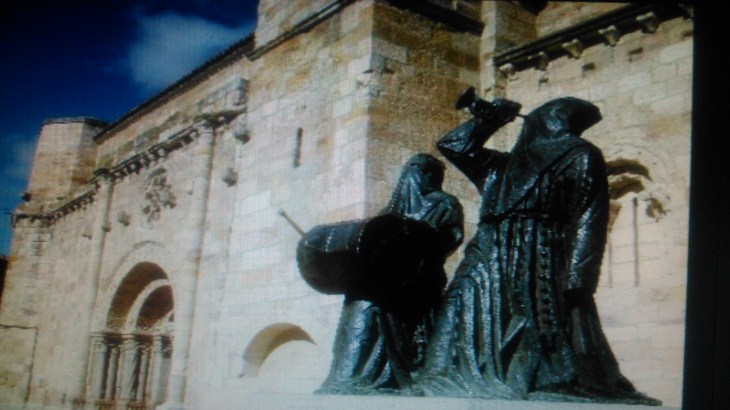
He imparted one final bit of information, and whether it relates to a Celtic past or not, I can’t be sure. The cathedral is famous for its many fine, pornographic carvings.
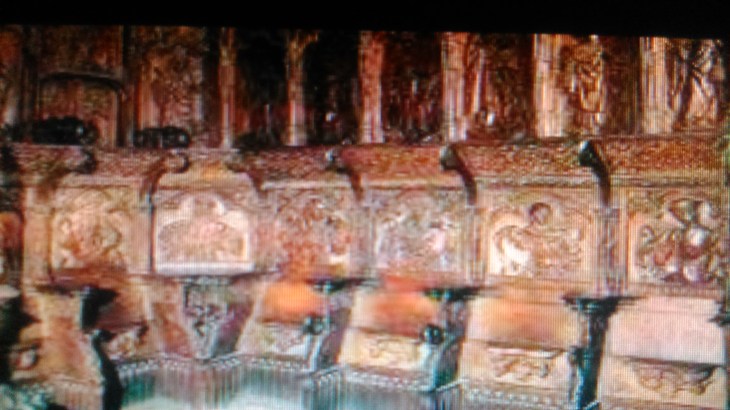
.
Camino de Santiago – Via de la Plata (Salamanca-Calzada de Valdunciel-El Cubo de Vino 34 Kilometres)
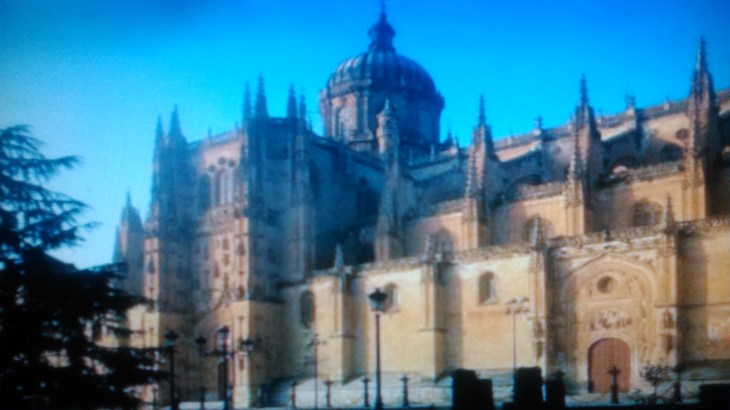
Salamanca is a beautiful city, and Victor and I examined every nook and cranny. However, he was convinced that there was a darker side to the city. Both the Templars and the Nazis, showed a keen interest in the caves behind the city, but inspite of Victor’s efforts on line, we didn’t have time to investigate. He was equally convinced, that the city and it’s churches were built on a huge line of energy, well known to ancient people. He frequently threw himself down in front of the altars, to communicate with Gaia (the mother goddess) , and feel the pulse of the world.
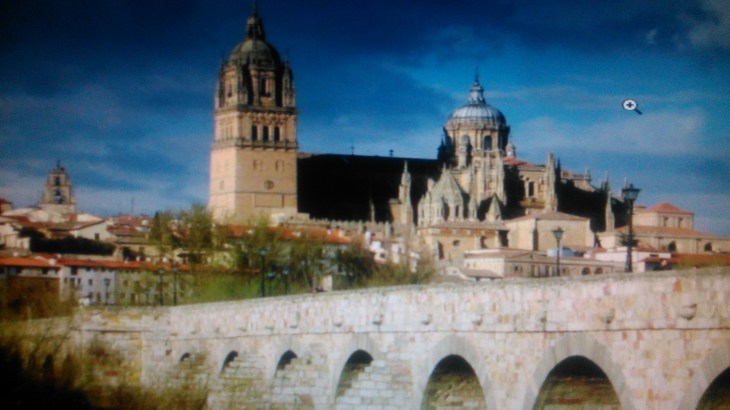
We had a.good walk, well signposted, to El Cubo de Vino. We cooked lunch outside, had a siesta and arrived late. In the alberge,we ate with the family and then chatted and watched television with them until bedtime, in front of a roaring fire. It was freezing outside, we were on the maeseta.
The Road to Salamanca
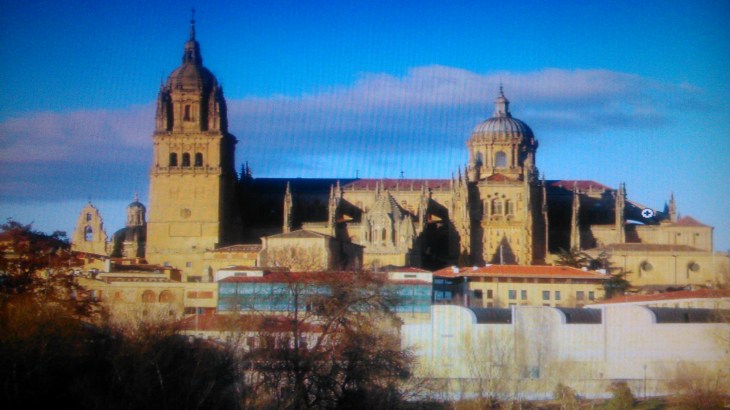 The walk into Salamanca from the surrounding hills, must be one of the most beautiful parts of this Camino. The alberge is near the cathedral, it is large, comfortable, and very well organised.
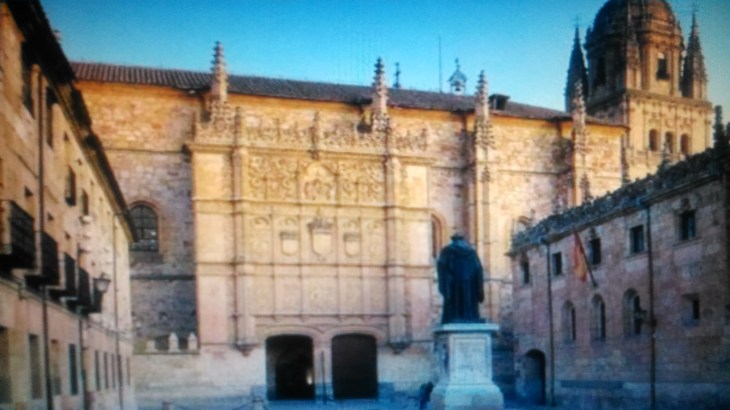
As soon as we had settled in, we made for the Taberna Celta, on the advice of Gerald Kelly, in his excellent guide , the Via de Plata. We received a very warm welcome, and were plied with, not only free food and drink, but also tales of the Camino, for most of the afternoon, by the owner, Caesar, and his friends.
Caesar told us that at the last ice age many people came to the Iberian Peninsula in advance of the ice, bringing with them their ancient knowledge. The first caminos were made by the Celtiberians, along ley lines or lines of energy, to Finisterra, to worship the sun, at the end of the world (Finisterra) .
He invited us back next evening to savour ‘chorizo del enfierno ‘, washed down with aguardiemte.
Camino de Santiago – Via de la Plata (Fuenterroble to San Pedro de Rozados 26 Kilometers)
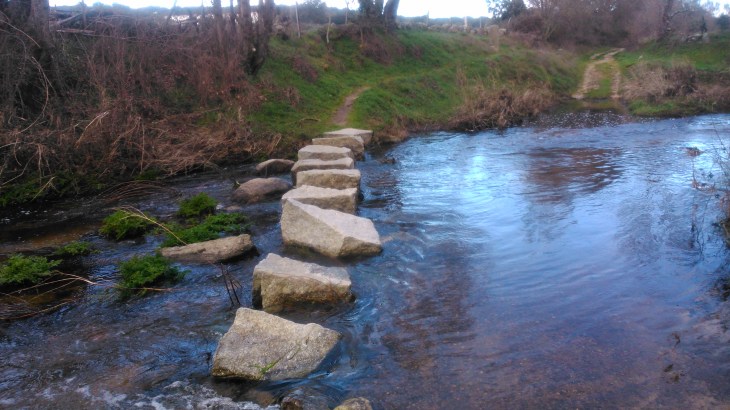
This is a beautiful but long stretch, along the Roman road, through the mountains and then, along quiet country roads to San Pedro. You need food, water, warm clothes for the morning, and sunscreen for the afternoon. There are rivers to cross.
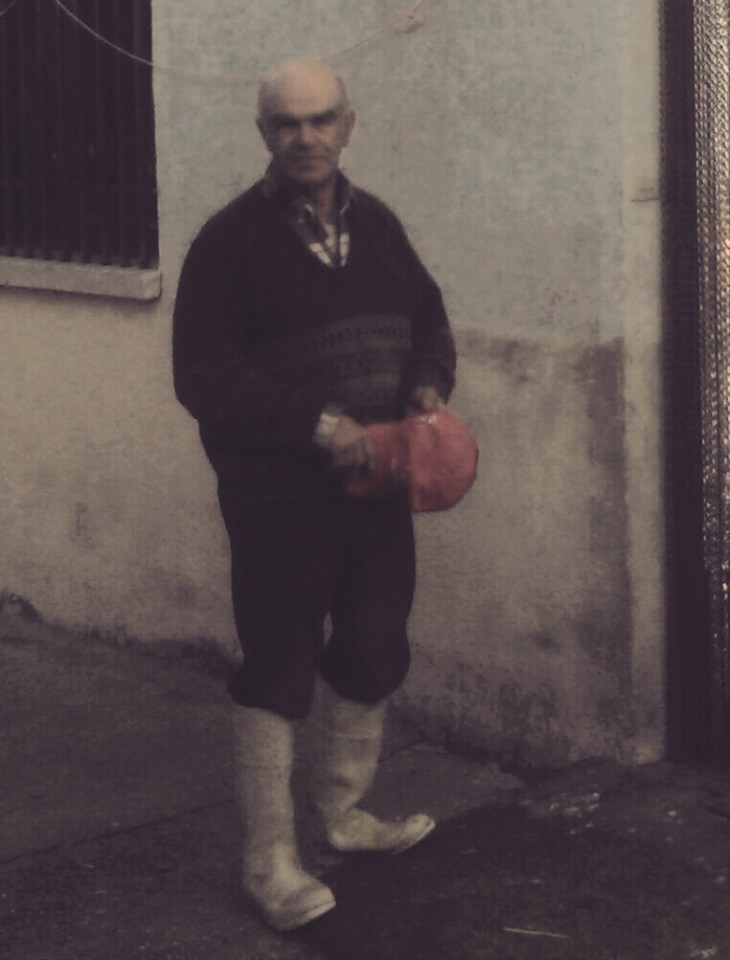
Tomás
I’m not sure if it was the healing hands of Tomás, the ‘Divine Cleaner ‘, ‘El Divino Sanador’ or a good night’s sleep, but I was full of energy and flew along.
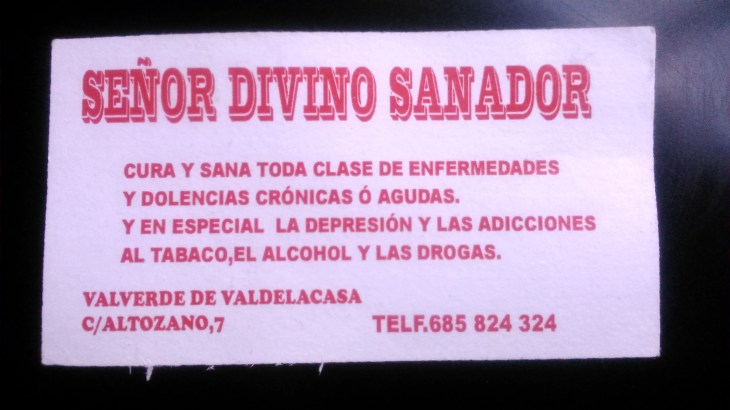
Tomás told me that I would get, not what I wanted, but what I most needed. This must be it!
I stayed with Mari Carmen at the VII Carreras Restaurant. Mari Carmen owns all the alberges, so there is little choice. However, she was very friendly and I had an excellent night.
 dandowlingblog