
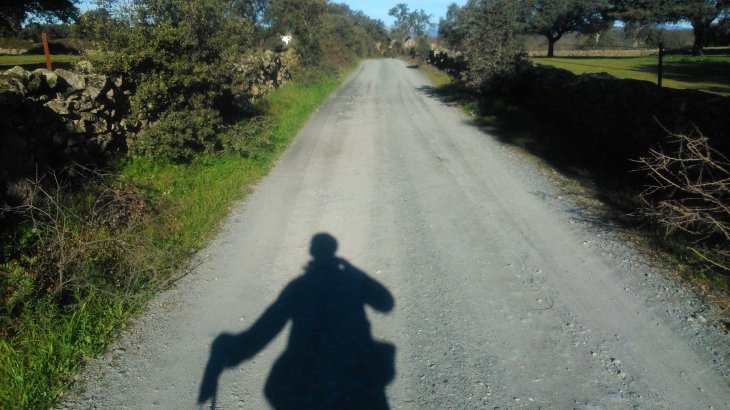
 I had no intention of walking so far, but it turned out to be an amazing day, one of the best so far, but that’s the Camino for you. I had a great breakfast in ” Las Cantalinas”. It was raining and looked pretty miserable. Everyone helped to wrap me in my poncho until I looked like an onion- onions are watertight in Spain. I was a very happy onion and waved goodbye, with advice to turn right back to the old Camino. In less than 100 metres, I met a local who was determined that I should turn around and walk in the opposite direction, to the other side of the village, and take the road and the new Camino to Galisteo. The weather was looking worse, I had doubts about the old Camino, and I took his advice. I walked through the village to the far side from ” Las Catalinas”, picked up the camino arrows at a petrol station, and followed them to Galisteo.
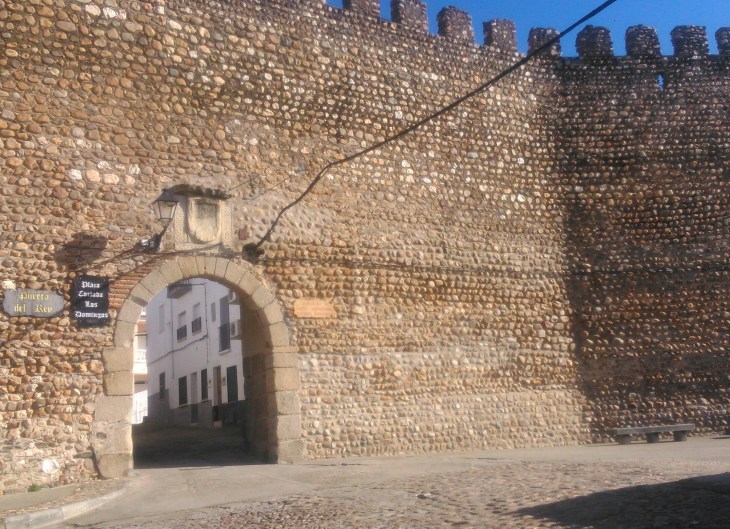
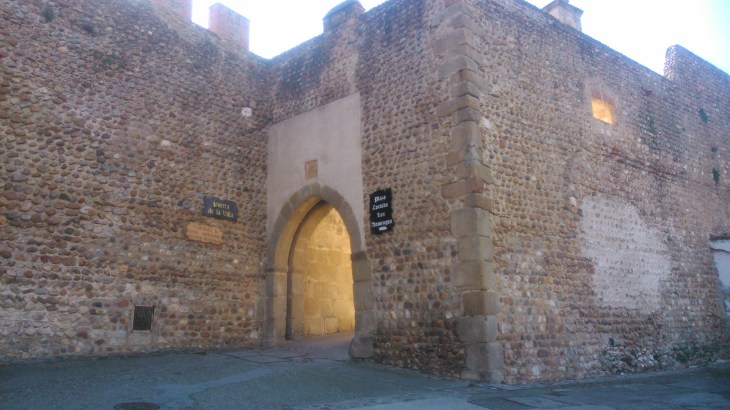
Galisteo is a knockout, a perfect walled town. Apart from a few stragglers outside, everyone lives within the walls.
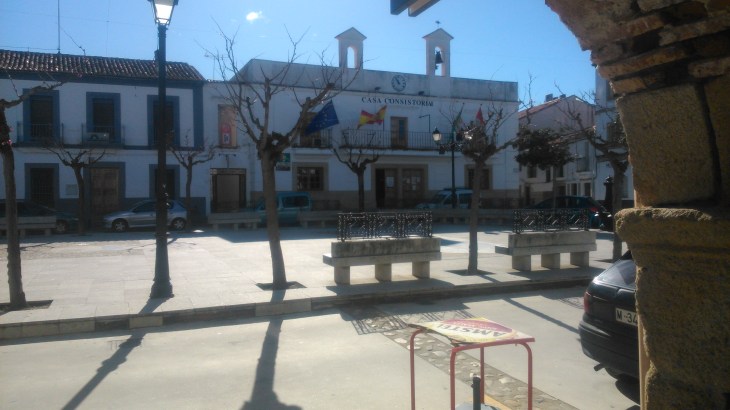
In the Plaza Mayor, in the bar beside the Casa Constitutional, I had a coffee and a gorgeous slice of tortilla Española for 1€.10. Virginia, the German girl, was still way ahead of me, but she had dropped both her scarf and her pilgrim passport, and had asked me to keep an eye out for them. I called into the Albergue to enquire , and I also asked after Victor, the lanky French man. Having described Victor, I got a wagging finger and those dead Spanish eyes. Victor’s bad boy reputation had reached Galisteo.
The route to Carcaboso, isn’t well marked but it is across the bridge built in 1534 and then onto the main road. Follow the road signs through the roundabouts and you will come to a very quiet road leading you all the way to Carcaboso.
In Carcaboso, head for the bar in the main street and you will get very friendly advice on both where to stay and how to leave and find the Camino again.To find the Camino and prepare for one of the most beautiful walks of your life, cross the main street from the bar, walk up the street with the Farmacia shop, this will lead you to the plaza, cross the plaza and as you start to descend you will see the Camino arrows. Strap in for a fantastic walk.
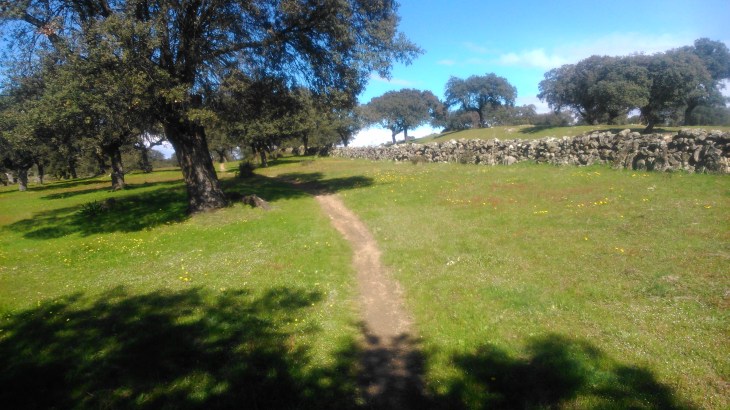


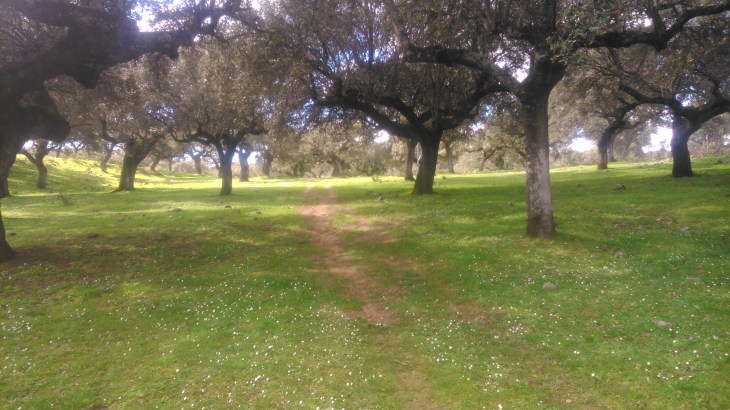


 This is a beautiful, moderate to easy, 13 kilometres walk, on quiet roads and grassy old tracks.

 Enter the forest and, after 100 metres, turn left and follow the tarmac path for about 1 kilometre. Emerge from the forest at the base of Slievemartin, a great place for lunch.


