Source: Carnmoney Circuit
Carnmoney Circuit
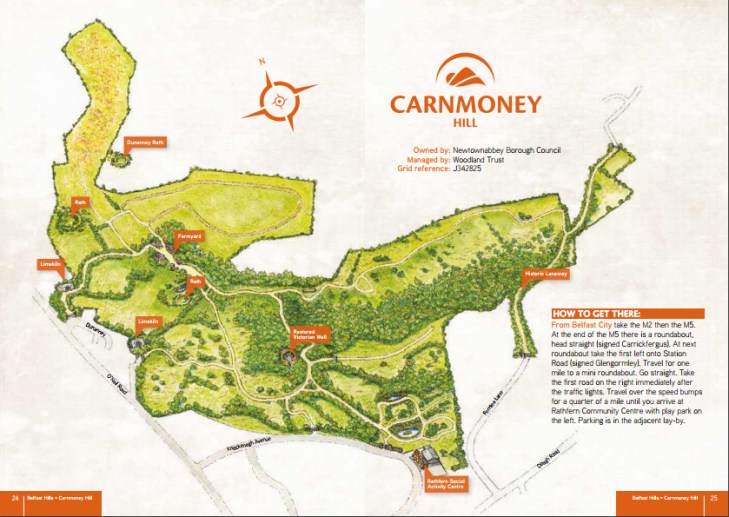
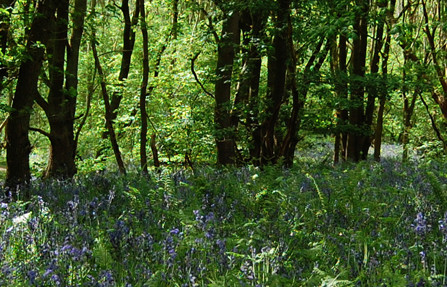
Carnmoney (from Irish Carn Monaidh, meaning ‘cairn of the bog’) has a wealth of history and is a honey pot of wildlife with grassland, wetland, wildflower meadows and ancient woodland.
We walked Carnmoney Hill last Sunday and it turned out to be a bit of a gem. For a map and statistics go to https://www.wikiloc.com/wikiloc/view.do?id=17385503
https://www.wikiloc.com/wikiloc/view.do?id=17385503
This 203-acre site is home to badgers, foxes and Irish Hare has an abundance of ancient features including a network of prehistoric engineered, underground tunnels called souterrains. Dunanney Rath is here and the remains of Victorian limekilns and a water well.
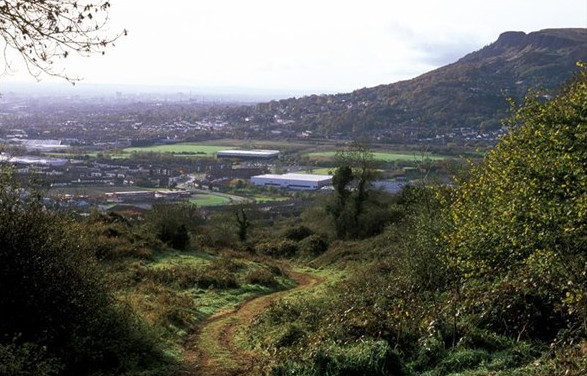
Dunanney is an early Christian rath, or fortified settlement and provides evidence of human habitation on the hill some 1,200 years ago. As you stand at the rath it is difficult to appreciate this span of time but just imagine a group of people, 1,200 years into the future, standing and gazing at the remains of where you lived – it helps to get you into the zone. In ancient times, fairs and festivals were held at Dunanney, with wonderful views over Belfast Lough. The fort may date to Celtic times (around 500 BC). There are several other raths that exist in and around Carnmoney Hill.
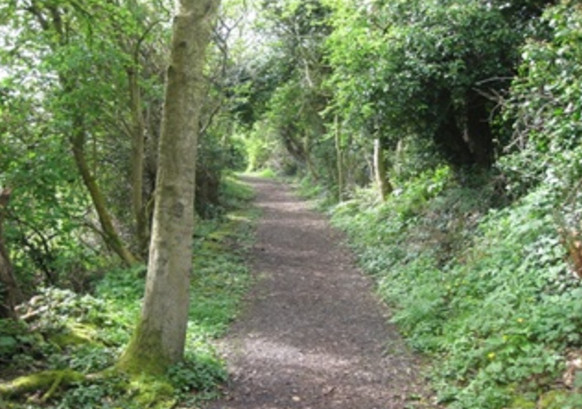
There are three walking routes ranging in difficulty and well sign posted. I would consider them easy for an experienced walker. If you click the link to Wikiloc you will see that we followed part of the blue route but then had a wander around.
On Carnmoney Hill you are never far from the city but it is a beautiful spot to enjoy a short walk. For more information go to
Galboly-The Hidden Village
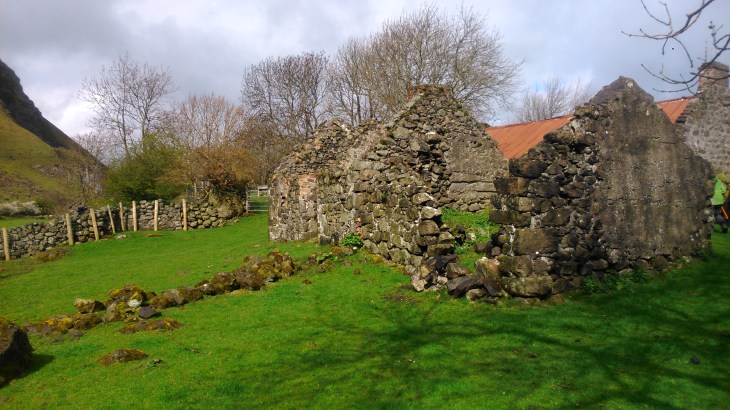
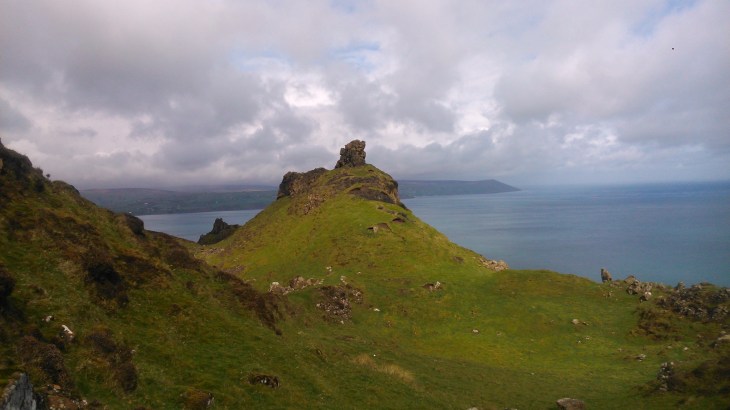
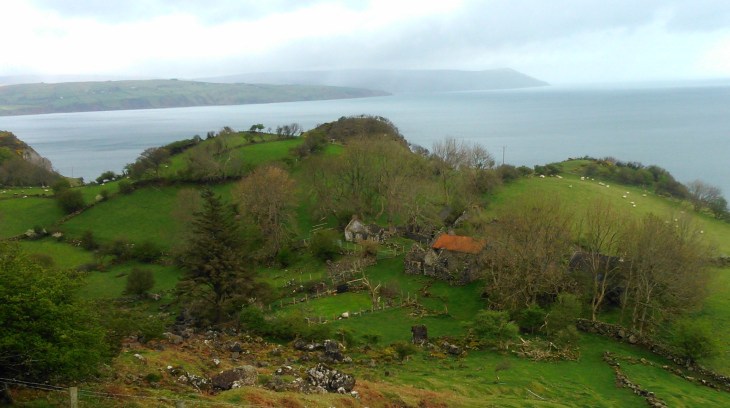
Today, Easter Sunday, we visited Galboly, the hidden village. It is not only a place of peace and great charm well off the beaten track but also one of the few remaining examples of an Irish clachan from more than a hundred years ago.
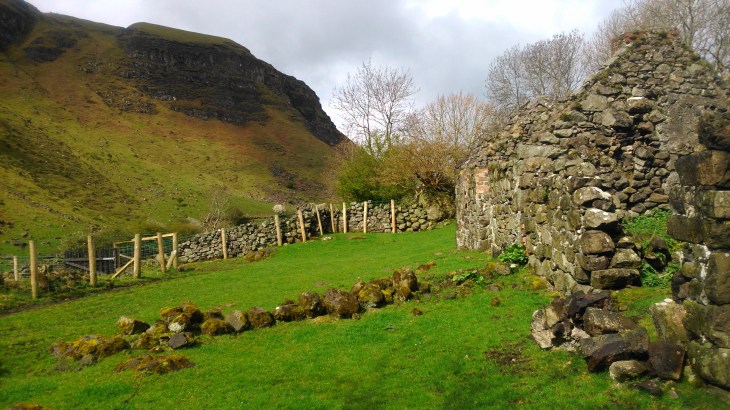
Nowadays, the houses are in ruins bar one which is occupied by a hermit monk. However, the village in its stunning, romantic setting is dripping with atmosphere, it is not difficult to time travel.
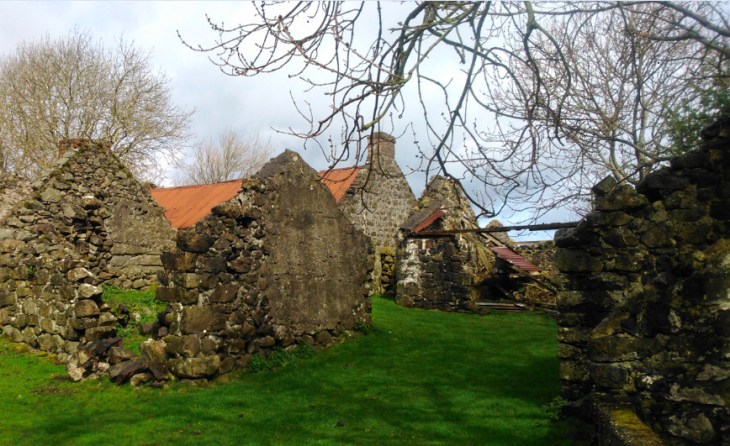
Just over a century ago, Galboly was on the main road which hugged the Antrim cliffs. However, in 1846-47 came the Coast Road more or less as we know it today. The construction of this new road relieved the Famine but it cut Galboly off from the rest of the world, leaving the village high and dry.
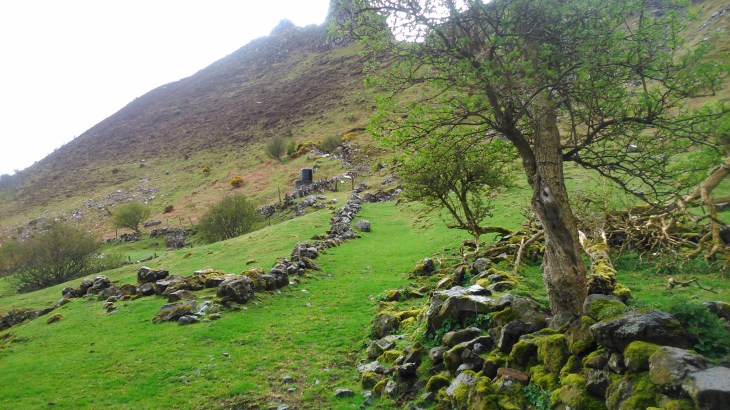
According to the population censuses of 1841, there were sixty inhabitants. This had dropped to six by 1951 and to only one today. However, it remains a truly remarkable place.
Cave Hill Circuit, Belfast
Source: Cave Hill Circuit, Belfast
Cave Hill Circuit, Belfast
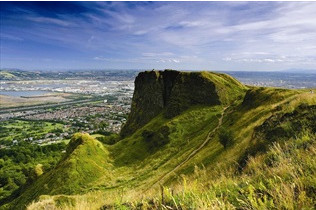
Cave Hill overlooks the city of Belfast and is distinguished by its famous Napolean’s Nose, a basaltic outcrop which resembles the profile of the emperor Napolean. It is also known, more historically, as Ben Madigan, which is derived from Beann Mhadagáin, meaning “Madagán’s peak”—so named after a king of Ulster called Madagán who died in 856AD. Cave Hill is thought to be the inspiration for Jonathan Swift‘s Gulliver’s Travels. Swift imagined that the Cave Hill resembled the shape of a sleeping giant safeguarding the city. The fort on the summit of the hill, McArt’s Fort, is an example of an old rath or ring fort. United Irishmen Theobald Wolfe Tone and Henry Joy McCracken met at Cave Hill in 1795 to take an oath to launch the rebellion of 1798. McCracken was captured on Cave Hill in 1798. The crowning stone Giant’s Chair of the O’Neill clan was a sited on Cave Hill summit until 1896 and gave its name to the nearby Throne Hospital
This is a challenging circular but very enjoyable route, with great views of the city and Belfast Lough. For a map and statistics go to https://www.wikiloc.com/wikiloc/view.do?id=17169104
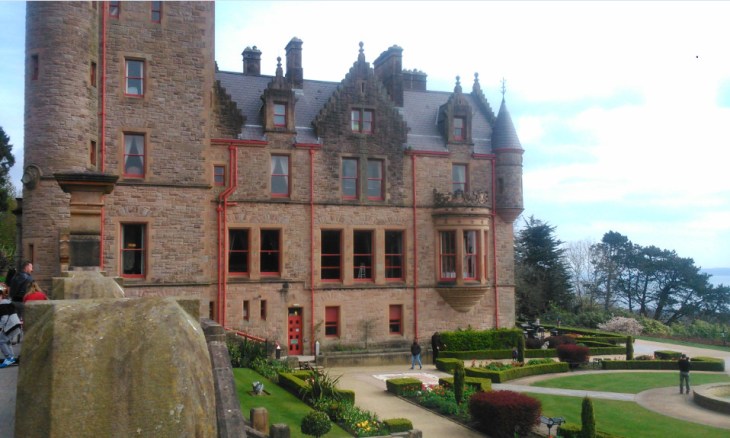
Begin at the interpretative panel in the car park just before the entrance to Belfast Castle. Climb up the path on your left until you reach the first junction. Turn right. Follow this path through the woodland, keeping to the left of any of the junctions you come to. This path leads up through the trees, climbing onto a plateau. Stop here to admire the fabulous views over the city and Belfast Lough.
Continuing on, take the next path on your left. This skirts around the Devil’s Punchbowl, passes below the largest cave before veering to the right. Follow this path as it climbs steadily up the hill.
Continue climbing up the steps to a cattle grid and fence, at the top veer to the left and follow the grass path to the top of the hill and McArt’s Fort. Pause again to take in the magnificent views before joining the main path on its gradual descent down the south facing slopes of Cave Hill.
Continue downhill taking the next lane on your left. This leads down past the top of Carr’s Glen and carries on for some distance before reaching the Upper Cavehill Road. Go down the footpath a short way and take the path to the left. Climb over the ridge and descend into Belfast Castle Estate. Return to the starting point by means of the footpath up the main driveway.
Silent Valley to Ben Crom
Source: Silent Valley to Ben Crom
Silent Valley to Ben Crom
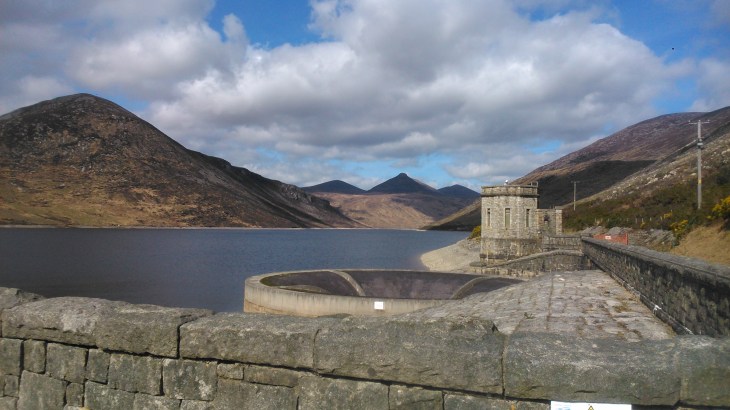
This is an easy 14.3 kilometres walk not only through the majestic natural beauty of the Mourne Mountains but also passing some amazing feats of engineering.
In 1933 the successful damming of the Kilkeel River valley was the end of 30 years of work started by Belfast City and District Water Commissioners. They were responsible for supplying water to the city of Belfast. This set in place the Mourne Wall and then the huge reservoir in “Silent Valley”. The reservoir was built to gather water from the mountains over most of the High Mournes. The Silent Valley and Ben Crom reservoirs supply water for most of County Down and a large part of Belfast. The two dams are ringed by mountains – while the reservoir grounds contain the parkland, lakes and ponds which were part of the original landscape design. Most of these areas are now open to the public.
For a map and statistics go to https://www.wikiloc.com/wikiloc/view.do?id=17046753
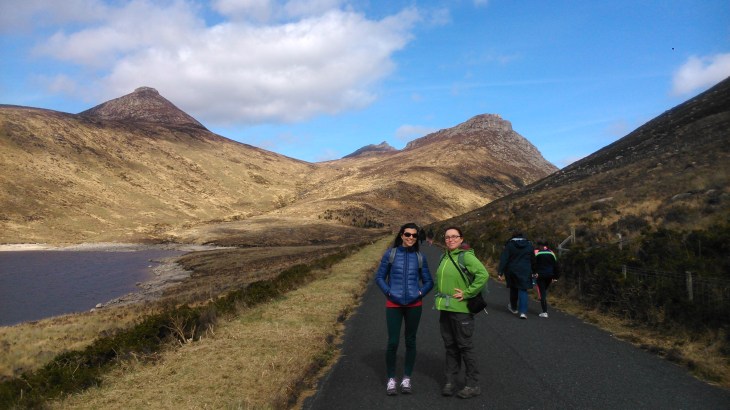
Start at the Silent Valley car park, OSNI Discovery Sheet 29, 306209. Follow the tarmac road along the side of the reservoir to reach Ben Crom.
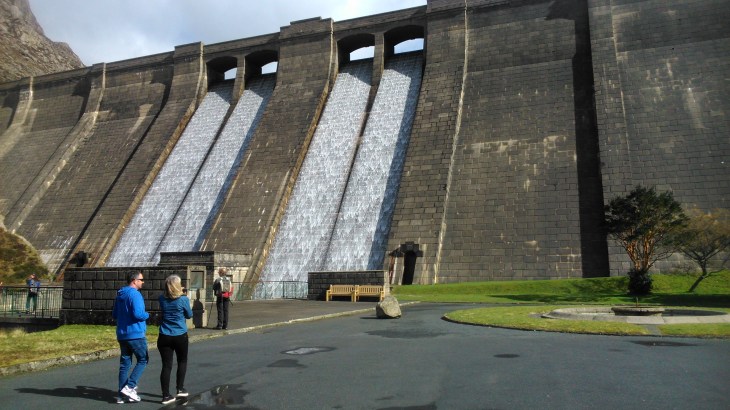
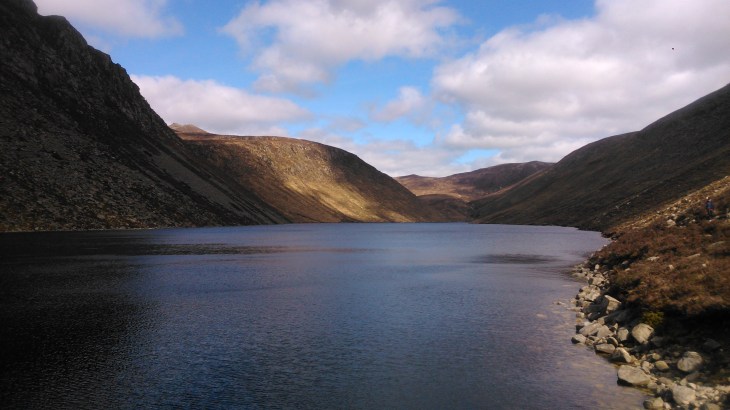
The track along the edge of Ben Crom is fairly rough and ready but well worth the effort.
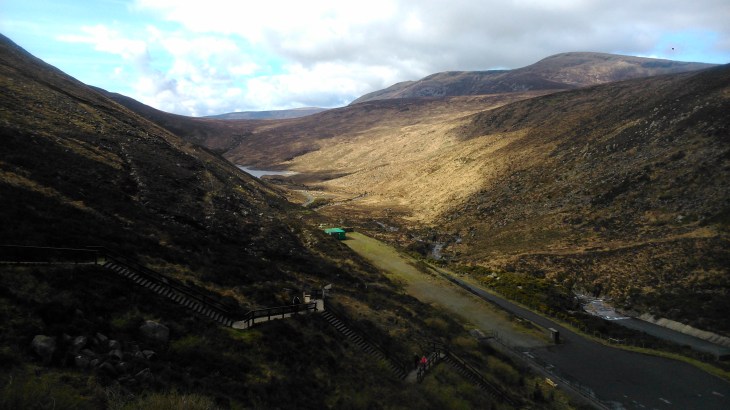
Use the same track and the tarmac road for the return journey, the views are equally stunning.
Stranmillis to Titanic, a Walk
Source: Stranmillis to Titanic, a Walk
Stranmillis to Titanic, a Walk
This is a great Belfast walk from the gentle elegance of Stranmillis to the Titanic Centre and the old industrial heart of the city. It is 11.8 kilometres in length, there and back and easy. For a more detailed map and statistics go to https://www.wikiloc.com/wikiloc/view.do?id=16919538
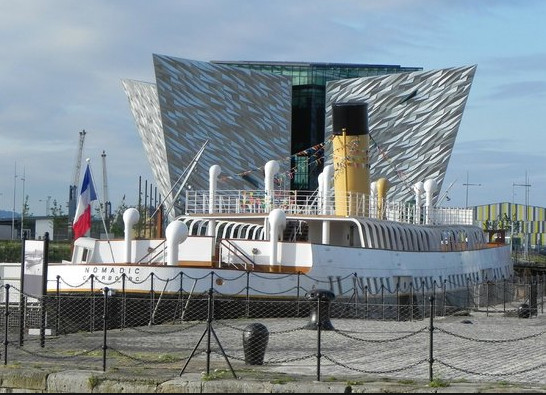
Start the walk at the car park at Cutters Warf, Stranmillis and follow the towpath and then the Ormeau Embankment towards the city centre.
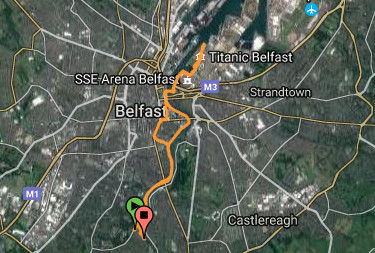
At Albert Bridge, cross East Bridge Street and follow Laganbank Road, pass the Waterfront Hall, Queen’s Bridge and the Big Fish. Cross the river on the footbridge, pass SSE Arena and followed the signs to the Titanic Centre.
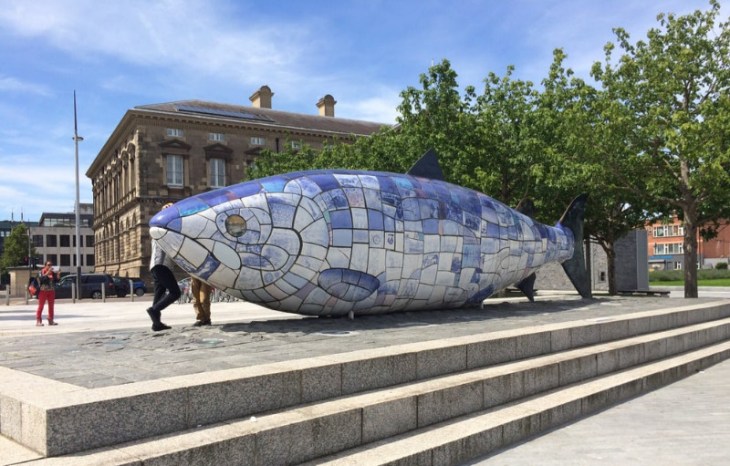
The Titanic Centre is well worth a visit but I found the SS Nomadic equally interesting. The Nomadic transported 274 passengers to RMS Titanic for the liner’s maiden voyage, including Sir Cosmo Duff Gordon and his wife, Denver millionairess Margaret Brown and industrialist Benjamin Guggenheim. On board the Nomadic you can walk in their footsteps and in the interior touch what they touched and see exactly what they saw. Surely there must be some traces, especially in view of that fateful night shortly to come, a glimpse of a top hat across a crowded room or a whiff of an expensive Edwardian perfume.
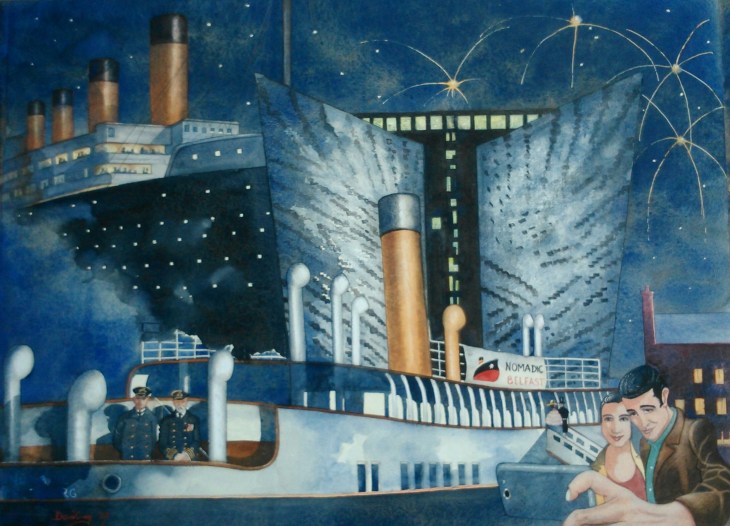
With these thoughts in mind, I made the painting shown below. It is a watercolour 50×70 centimetres and shows not only the Titanic Centre with a couple of modern-day tourists taking a selfie but also, in the background, the RMS Titanic at full steam with either signal flares or fireworks illuminating the sky, an Edwardian couple boarding the Nomadic and the captain of RMS Titanic, Edward J. Smith and his first officer standing in the stern. I am sure they are all there if only we had eyes to see.
The Exhibition
My exhibition called “Via de Plata” opens tomorrow night, Thursday 1 December, at 7pm, in the Cultúrlann, Falls Road, Belfast. The work was inspired by a 1000 kilometres walk, I compl…
Source: The Exhibition
 dandowlingblog