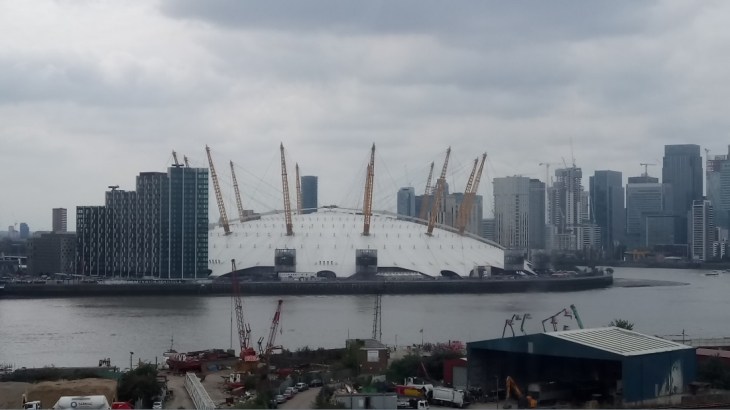
The O2 Arena ( former Millennium Dome) from Trinity Buoy Wharf
My friend Gary and I recently spent a week in London. We went in search of the lesser known sights of the capital, the interesting and the obscure, well away from the relentless tramp of the tourist. Trinity Buoy Wharf certainly fell into this category.
Trinity Buoy Wharf is the Thameside site where all the buoys and markers for the River Thames were once made and repaired. The site was rescued from dereliction and now its lighthouse (the only one in the capital) overlooks a growing creative community.
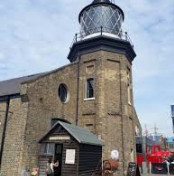
The Lighthouse
Also located on the site are a nostalgic ’40s food joint, FatBoy’s Diner, and what may be London’s smallest museum, The Faraday Project. Housed in a tiny wooden hut, it’s devoted to the Victorian scientist Michael Faraday who conducted experiments into electric lighting in the lighthouse in 1863.
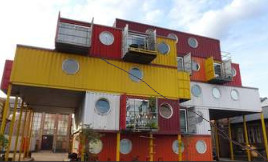
Artist’s Studios and Offices
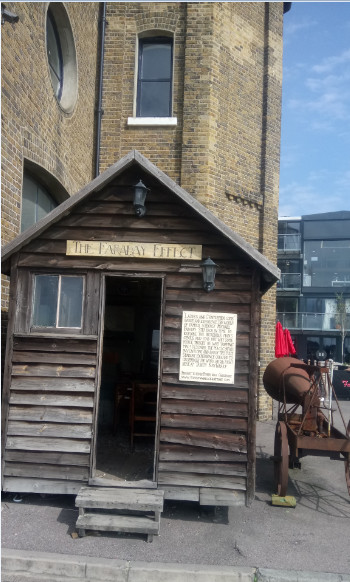
The Faraday Project
Today the lighthouse is an unusual art venue (open to the public at weekends, 11am-5pm in summer, 11am-4pm in winter), hosting Jem Finer’s ‘Longplayer’, a digital musical composition, commisioned by Artangel and designed to play in real-time, without repetition, for a millennium. An installation by Ingrid Hu of 234 singing bowls is part of a 667ft wide instrument used on occasion to perform a section of ‘Longplayer’ live.
The most exciting way to get to Trinity Buoy Wharf is by taking a short ferry trip across the Thames from the O2 QEII Pier (Mon-Fri 5am-7pm; £2 each way). This little boat holds about six people and seems strangely incongruous in the beating heart of an ultra-modern metropolis. Rather than returning on the ferry you can make a really interesting round trip. It is a short walk to Canning Town Station from where a couple of stops will take you to the Emirates Airline cable car. For £3.50 you can fly back to the O2 Arena and enjoy not
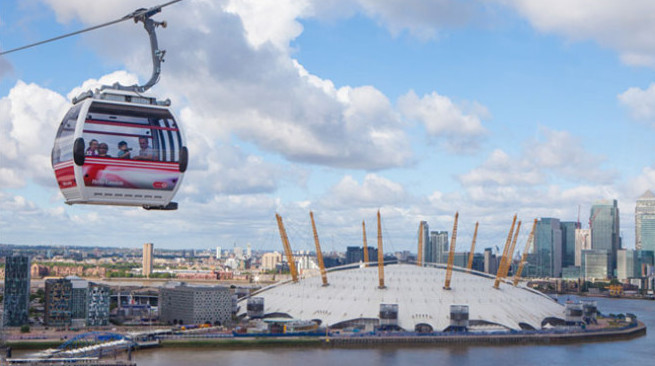
Fly Emirates
only wonderful views of this vibrant part of the city but also a very well informed commentary.
 dandowlingblog