Colin Glen Forest Park and the Rumble Hole

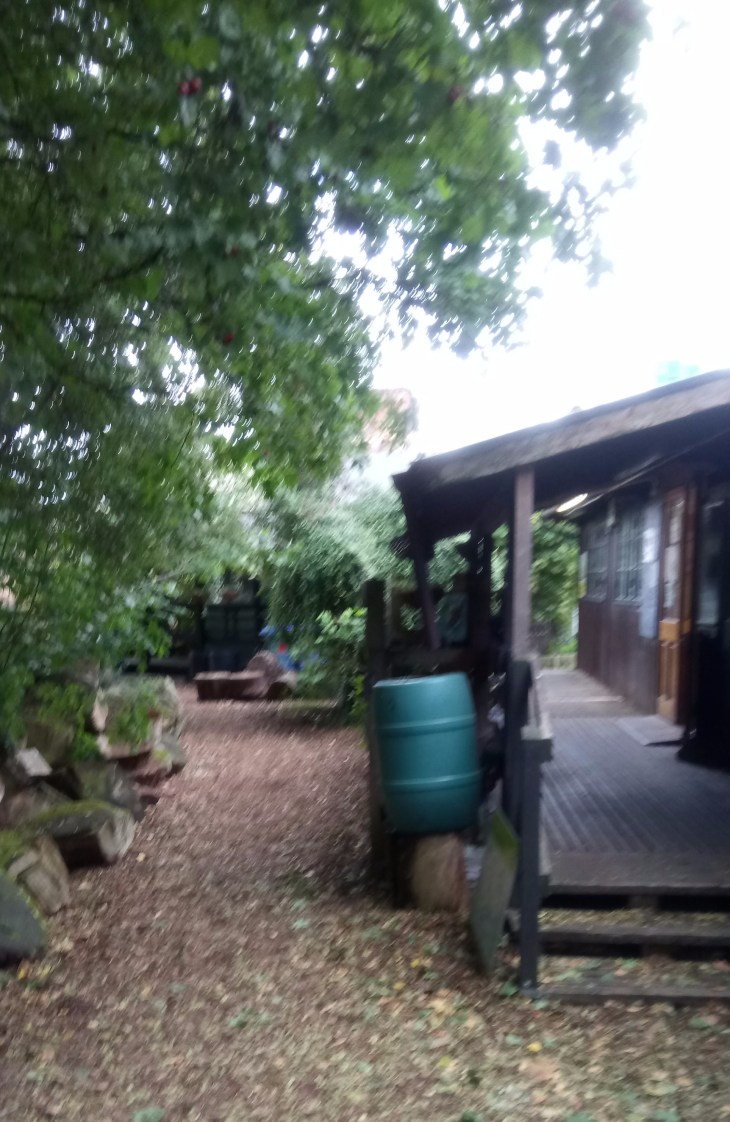
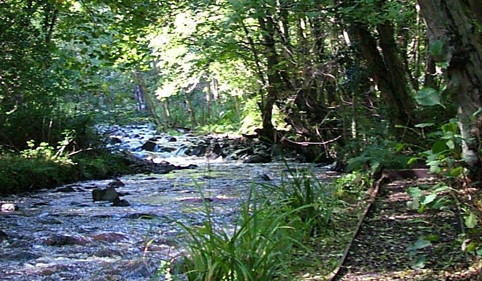
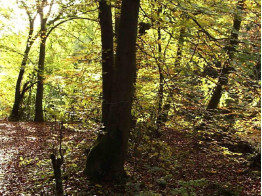
Colin Glen Forest Park is one of the ‘green lungs’ of Belfast and contains many excellent walks. It is easily accessible from the city centre and it hard to believe that you can leave the razzmatazz that is West Belfast and plunge into the arms of mother nature within a couple of moments.  Although you do have to run the gauntlet of the Gruffalo for the first few hundred metres, he’s not too intrusive.  On this occasion, we walked from the car park at the Colin Glen Centre to the waterfall called the Rumble Hole and then retraced our steps, a very pleasant 10 kilometres tramp.  For a detailed map and more photographs go to https://www.wikiloc.com/wikiloc/view.do?id=19888307
Colin Glen2

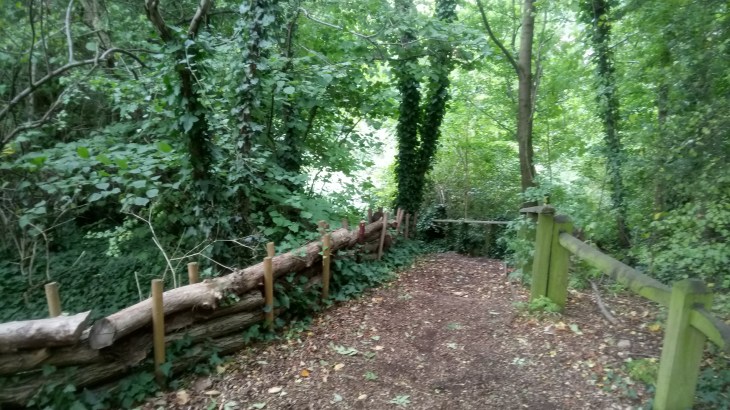
Start in the Colin Glen car park on the Stewartstown Road and follow the main path, always keeping to the right at the many intersections through stunning forest views until you reach the stone bridge at the Upper Glen Road.
Colin Glen1

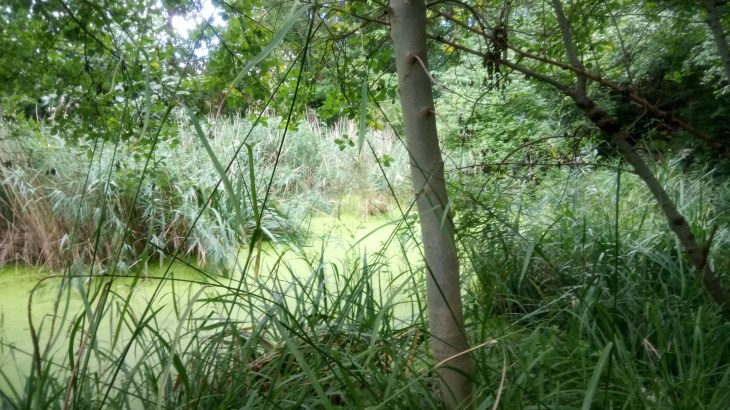
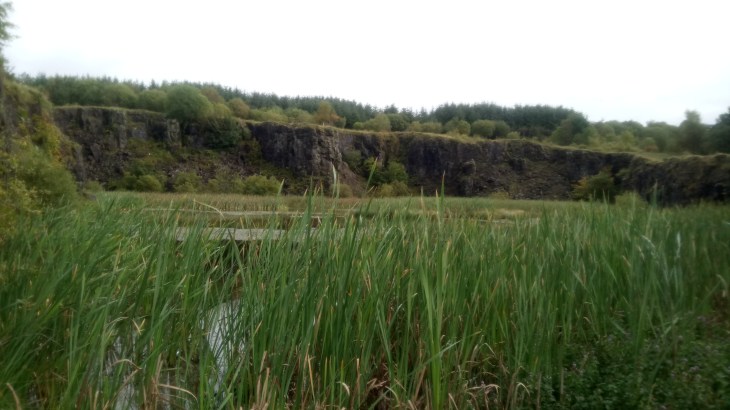
Pass under the bridge, turn right and ascend the steps.  At the top, turn left and follow the trail, high above the river.  This is a very beautiful but much narrower path and should be negotiated with care.  Eventually, it drops down to a stream which can be easily crossed using the stepping stones.  Once across,  turn left and continue walking for, approximately, another ten minutes until you reach a metal post on the right which marks the track to an old flooded quarry.   This post is very easy to miss but the attached map should be useful.
Colin Glen 8

At the quarry go left and keep straight ahead ignoring the first road on your right.  The Rumble Hole will soon swim into view.  As you approach the waterfall you will again become aware of the influence of the city.  Late domestic appliances, innards akimbo and, possibly, the flotsam and jetsam of lost alien spacecraft leer at you from the undergrowth.  But, give them no quarter, the Rumble Hole is well worth it!

Colin Glen 7

A Week in London – The Regent’s Canal and Vinyl Heaven

DSC_0122

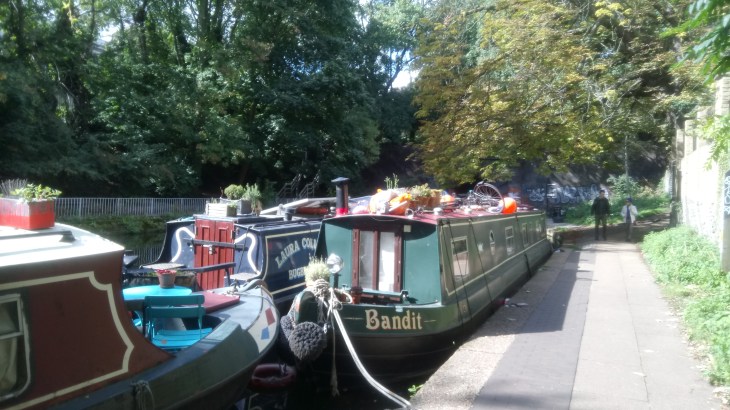
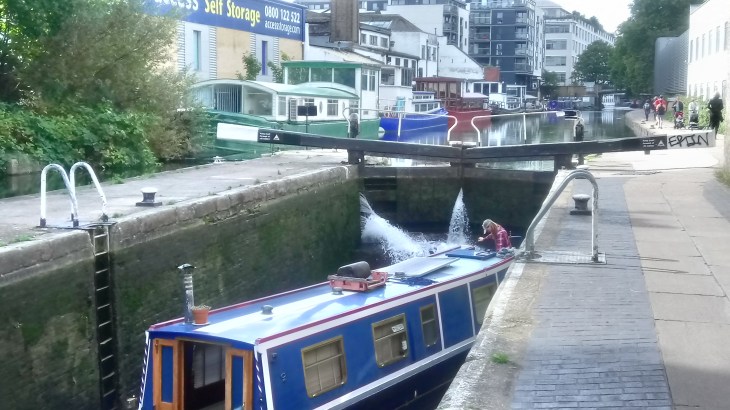
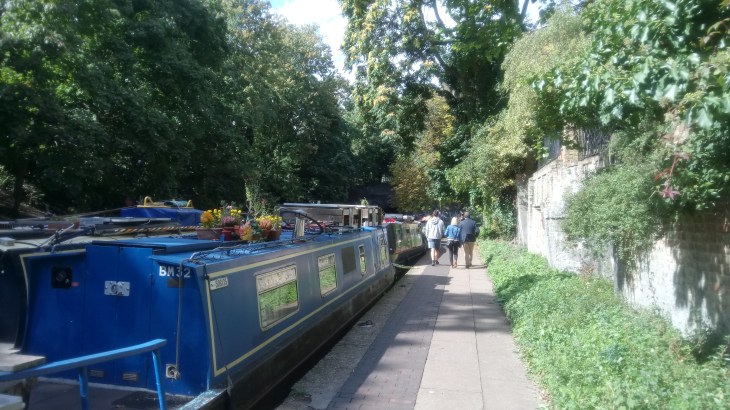
Camley Street Natural Park is bounded on one side by the Regent’s Canal.  The canal is one of London’s best-kept secrets-a peaceful haven often hidden by the surrounding buildings.  Today it is well-loved by boaters, cyclists and walkers all looking to escape the capital’s busy streets.

DSC_0126

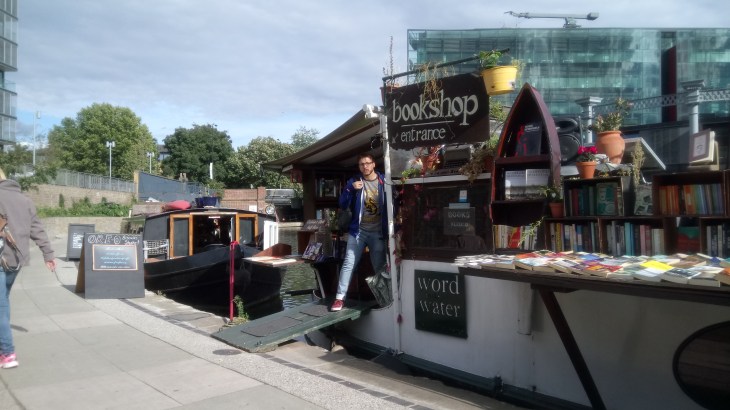
A few years ago, librarian Luke Guilford decided to give up his job and turn his passion for vinyl into a business.  Unable to afford London rents, Guilford turned his houseboat into a floating second-hand record and bookshop.

DSC_0121

We met him on the Regent’s Canal and spent a happy hour browsing – another gem of London.

DSC_0123

A Week in London – A Secret Garden

dsc_0116.jpg

Camley Street Natural 🏞 Park is not so much a secret garden but more of a miracle of survival. The area around King’s Cross, St. Pancras has long been cleaned of crack-heads and kerb-crawlers only to become a shrine to concrete monstrosities and shiny faceless office blocks.

DSC_0117

The park is a wonderful two-acre wildlife sanctuary wedged between the railway tracks of St. Pancras and the Regents Canal.  Originally zoned as a lorry park this tiny gem has been stoutly defended from those slippery properly developers by the locals with the assistance of the London Wildlife Trust for more than thirty years.

DSC_0118

There are kingfishers, dragonflies, frogs and an abundance of creepy-crawlies but to mention a few of the delightful inhabitants to be encountered.  Although you are never far from the thumps, rumbles and wailing of the city, this is a garden of serenity in the heaving megalopolis that is London.  It is well worth a visit and very well worth preserving.


A Week in London – The Horse 🐴 Hospital

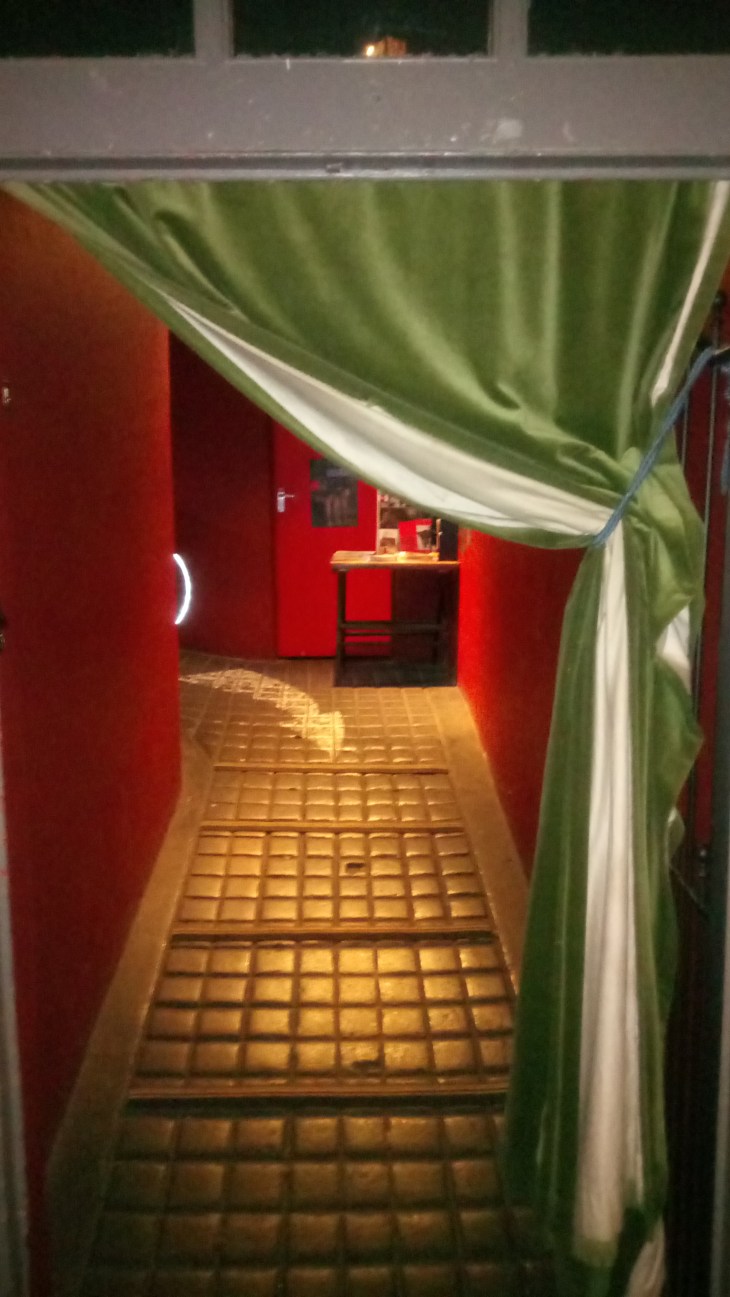
Buried away in a cobbled mews off Russell Square, is the Horse Hospital.  In its Victorian heyday, this really was a sanctuary for sick horses, as the cobbled floors and the slated ramps instead of stairs will attest.

DSC_0110

However, today this is a self-styled Chamber of Pop Culture, where an audience of eccentrics enjoys the most eclectic line-up of art events in London, from cult films to performance poets and clairvoyant workshops. In fact, anything goes – as long as it is defiantly anti-establishment.

DSC_0111

The Horse Hospital, as it is today, was founded in 1993 by stylist and costume designer Richard Burton, one of the pioneers of punk fashion, together with Vivienne Westwood and Malcolm McLaren.

DSC_0114

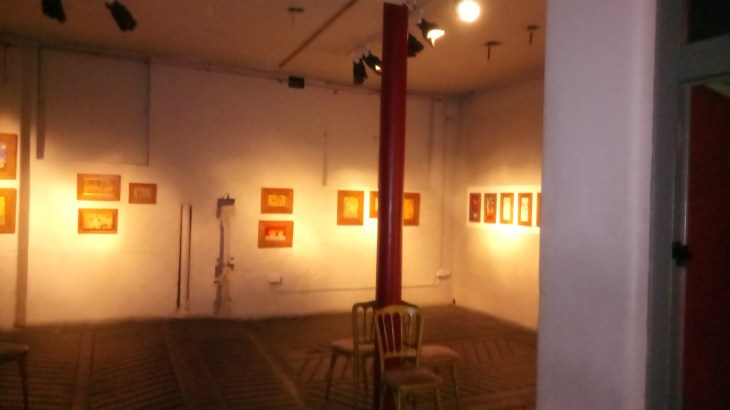
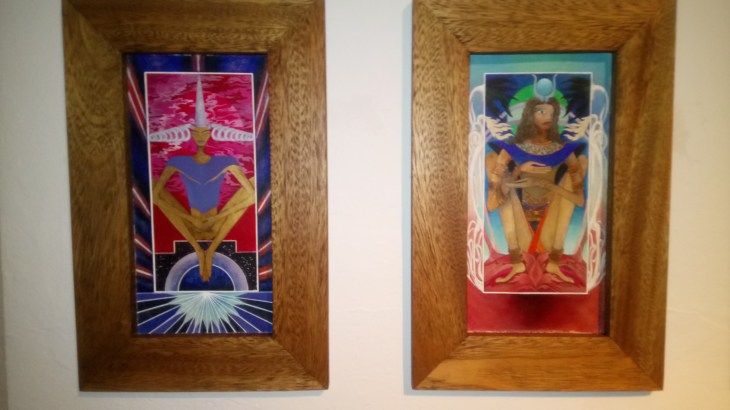
The current exhibition is a retrospective by the polish artist Ariela Widzer.  Her work concerns figurative manifestations of the occult and mysticism and is very apt for this atmospheric but more than slightly spooky space – only in London.

A Week in London – ‘The Battle of Cable Street’, Whitechapel

_20170914_142326

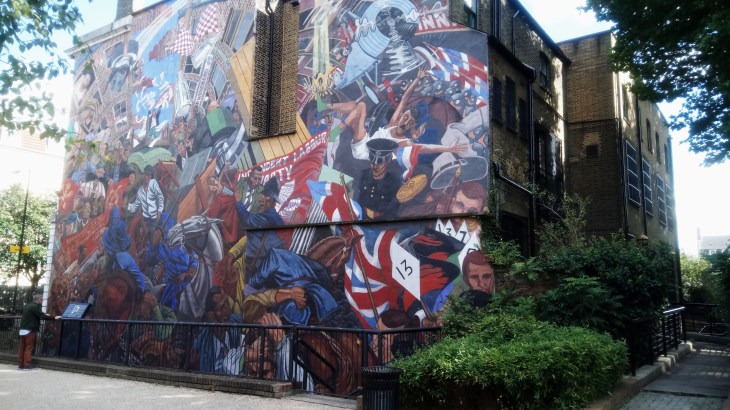
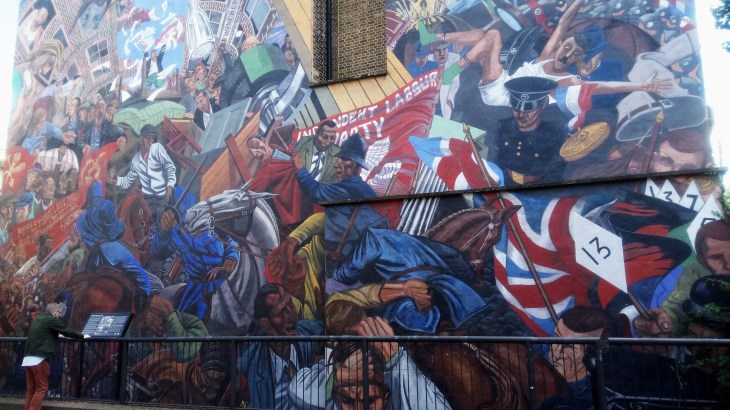
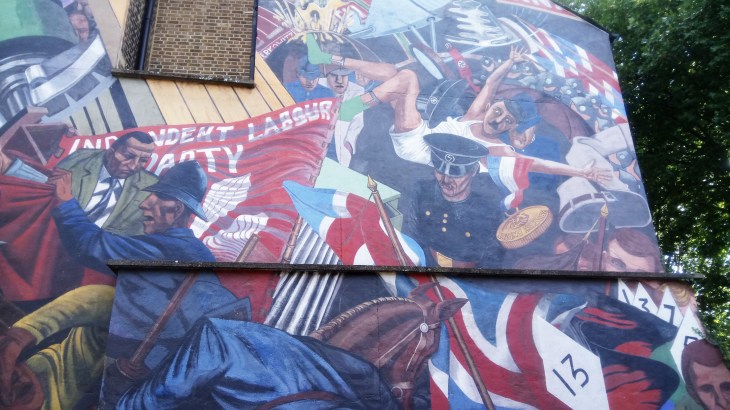
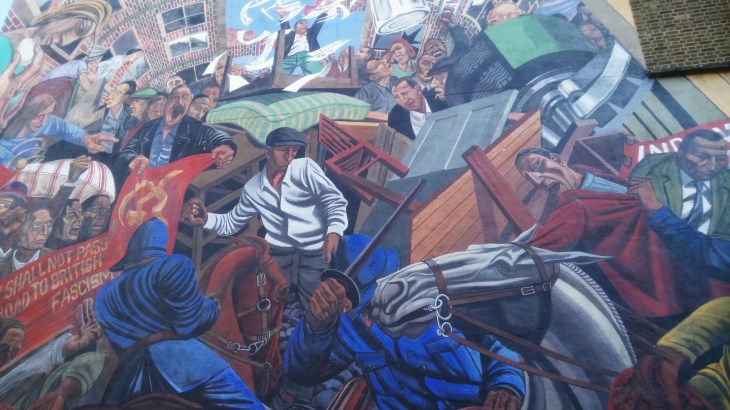
Today, we went to see a mural in Cable Street, Whitechapel, which records the ‘Battle of Cable Street’.

_20170914_142354

In 1936 Oswald Mosley led the British Union of Fascists on a march into the East End, at that time the centre of London Jewish life. Large numbers of anti-fascists, including

_20170914_142415

Jewish, Irish, socialist and communist groups came out to protest. The fascists were escorted by 10,000 police but nevertheless, battle ensued and they were forced to abandon the march.

_20170914_142435

The mural, very much in a Diego Rivera style, records the event in colourful detail. Even though the surrounding houses are fairly  dilapidated the work is very well maintained as an icon of East End history.

A Week in London – the lions in Trafalgar Square, lions or pussycats?

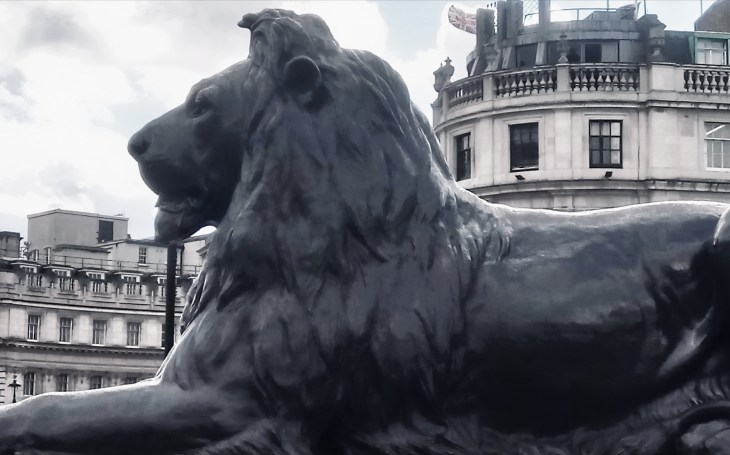
Here’s the skinny on the lions in Trafalgar Square and what artists have to do to make do. After much hullabaloo the commission for the four bronze beasts was given to Sir Edwin Landseer, Queen Victoria’s favourite 🎨 painter.

_20170911_163140

Landseer had an unrivalled reputation as an animal painter but had never sculpted anything in his life. He spent hours in London zoo studying the lions there but under time pressure and struggling with poor health,  he had to resort to using an ordinary domestic moggie 🙀 as a model.

The end result, the four bronze lions,  are both majestic and magnificent. But it’s nice to know that there is a bit of pussycat in there as well.


A Week in London-A Mummified Philosopher

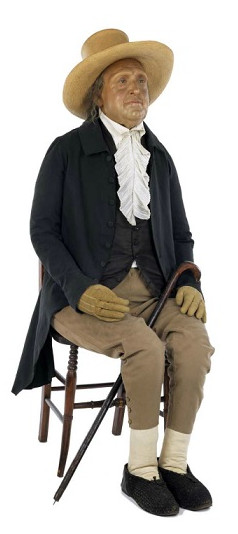
Bentham 2Today we visited the auto-icon of Jeremy Bentham in University College, London, a very curious experience indeed.  At the end of the South Cloisters of the main building stands a wooden cabinet which contains Bentham’s  preserved skeleton dressed in his own clothes, sitting in his favourite chair and surmounted by a wax head.  Bentham requested that his body be preserved in this way in his will made shortly before his death on 6 June 1832. He called it an Auto-Icon (‘man in his own image’), whereby a man’s actual corpse replaced the traditional memorial statue.
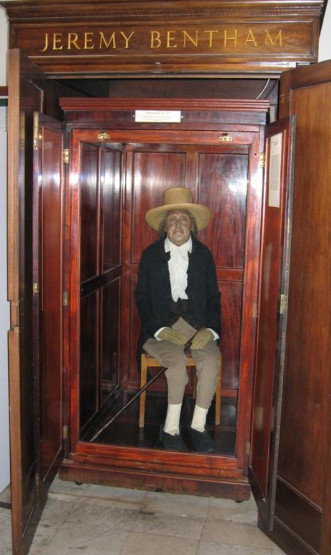
Now, this was no ghoulish indulgence on my part, Bentham has been a hero of mine for some time.  He was a visionary and a great humanitarian, with ideas far in advance of his time. He believed in universal sufferage, the legalisation of homosexuality and utilitarianism, a doctrine which aims to promote the greatest happiness for the greatest number of people.
He left his organs to medical research and so the skeleton is there but the body beneath the clothes is simply stuffed with straw.  Nevertheless, there is a presence and people are plainly taken-aback no matter what they are expecting or how well informed they are. They tend to descend into deferential whispers in front of the cabinet. In fact, their reactions on first seeing the Auto-Icon are recorded by a hidden camera.
Originally, Bentham’s head was to form part of the exhibit.  It was to be preserved by a Maori practice of desiccation and for ten years before his death, Bentham, allegedly, carried the glass eyes that were to adorn it in his pocket.   Unfortunately, the head deteriorated rapidly into such a gruesome condition that it had to be replaced with a wax likeness.
Rumours persist that the Auto-Icon attends meetings of the College Council.  Its presence is recorded in the minutes with the words ‘Jeremy Bentham – present but not voting’.
Bentham

A Week in London-What Remains of Newgate Prison?

Viaduct2

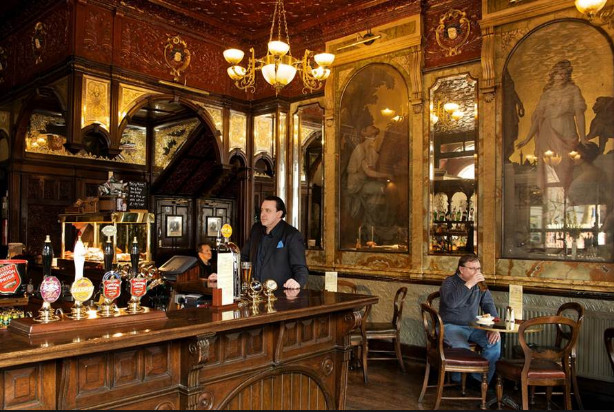
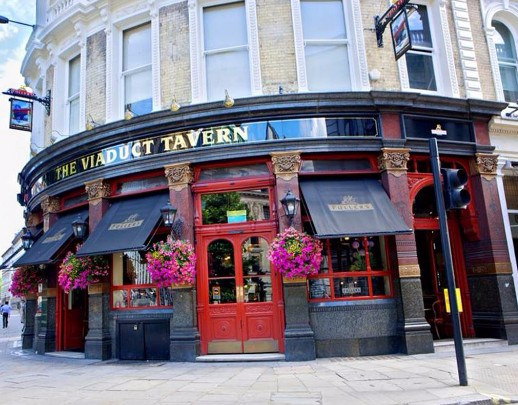
The Viaduct Tavern, 126 Newgate Street,  is a beautiful old Victorian tavern.  It has a wrought copper ceiling and a triptych of oil paintings representing Commerce, Agriculture, Science and the Fine Arts.  There was an opium den upstairs in the 19th century, but alas now closed.  However, the food and drink, the victuals served in the bar are excellent.

Viaduct

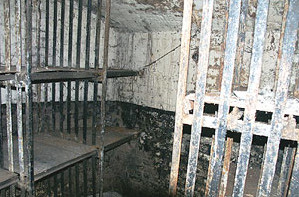
But what lies beneath?  Little remains of the infamous Newgate Prison.  It was London’s main prison for five centuries and built in a style known as ‘architecture terrible’ in an effort to discourage law-breaking.  The prison closed in 1902 but below the Viaduct Tavern cells have survived and they are genuinely horrible: cold, damp and

Viaduct 1

dark and in sharp contrast to the comfortable lounge upstairs.  Up to twenty criminals – usually debtors – were crammed into each one in what must have been total misery. Prisoners had to pay for the privilege of being locked up – or starve to death.

This is not only a regular haunt of ghost hunters and tales of bumps in the night and apparitions abound.  But it is also a genuine opportunity to visit the underbelly of a great city’s less salubrious past.


A Week in London

I am spending a week in London with my friend Gary.  We are staying just behind Tate Modern, a great location. However, rather than visit the big tourist attractions yet again, on this trip we are determined to find the odd, the obscure, the kitsch and the lesser-visited places of interest.

I have always been a Holmes and Watson devotee but standing outside the Abbey National Building Society at 221b Baker Street, their fictional address, has always been nothing short of a deflating experience.  However, I have recently discovered that in 1951, as part of the Festival of

Holmes2

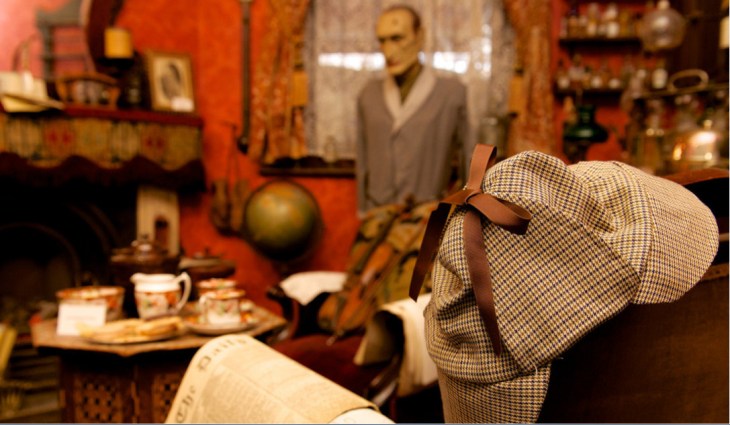
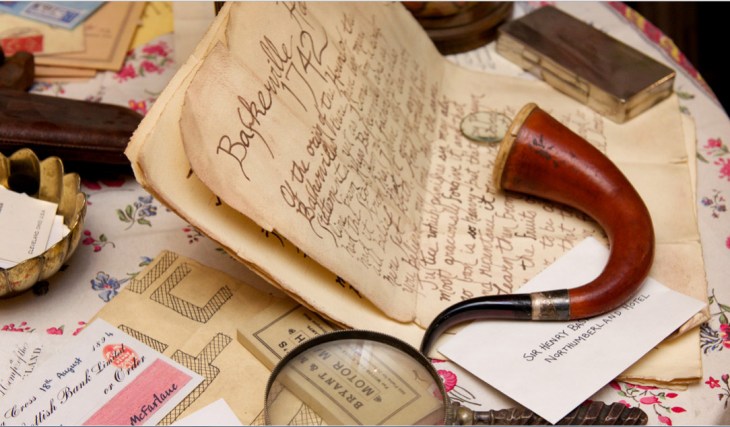
Britain, the building society staged an exhibition at its offices, recreating the sitting room at 221b according to the theatre design of Michael Weight.  This can be found today, intact, in the former Northumberland Arms pub, now known as the Sherlock Holmes.  It is delightfully kitsch but the attention to detail makes it worth it.

Holmes 1

There is a reference to many of the stories, for example, The Red-Headed League and The Adventure of the Dancing Men.   The is a wax dummy of the famous detective with a bullet hole in his forehead, a reference to The Adventure of the Empty House.  To top it all the food and craft beers are excellent.  I think Holmes and Watson would have been very much at home here.  

The Gentle Art of Drawing

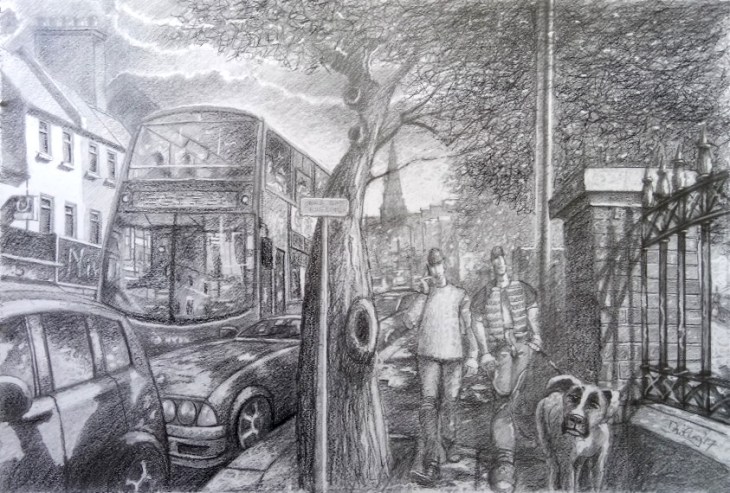
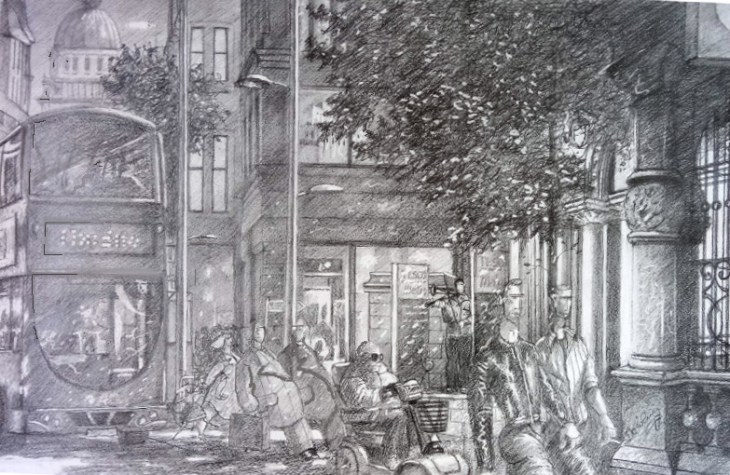
I have always thought of drawing as a form of meditation or mindfulness.  It is a process which not only involves hand, mind, and heart but also it is essential to stop thinking and to and live in the moment, in fact, to go beyond thinking.

In the City 1

That sounds very arty-farty, I know, but everyone knows how to get into their own particular, special zone.  The philosopher Friedrich Nietzsche said, “You never exist quite so much as when you are not thinking.” and that guy knew a thing or two.  So why not grab a pencil or better still a big piece of charcoal, slip the brain into neutral and get down and dirty with a bit of sketching.  But, don’t expect perfection because it ain’t out there.

In the City 2

Above are of two of my recent drawings, pencil on paper.  Whilst the act of drawing involves a non-thinking mode, there is a certain thought process behind the images.

They represent the journey of life and how we should live our lives, in other words, my favourite hobby horse.   Is the journey of life just a case of getting through, going along with the crowd and joining the club or should we commit to our lives?  Should we take hold of our own life, manifest our talents and become the person that we really are?  The first drawing shows a moment in time and a moment in life on the Antrim Road, Belfast near the Waterworks Park, a very familiar location to me.  The second shows an endless stream of people walking through the centre of Belfast, passing Tesco Metro and the Reform Club.  There is a musician who, daily, scratches out a tune near this location.  He plays an unusual instrument called a Stroh violin or phonofiddle.  Here, in this drawing, he is providing the background music to this march of humanity through their lives.