Colin Glen Forest Park


Colin Glen 1

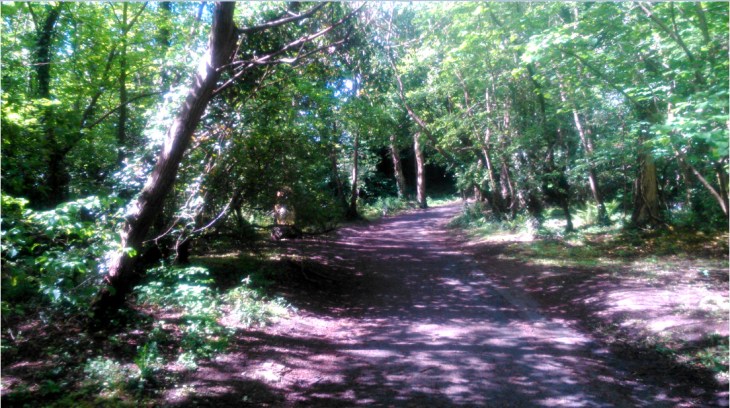
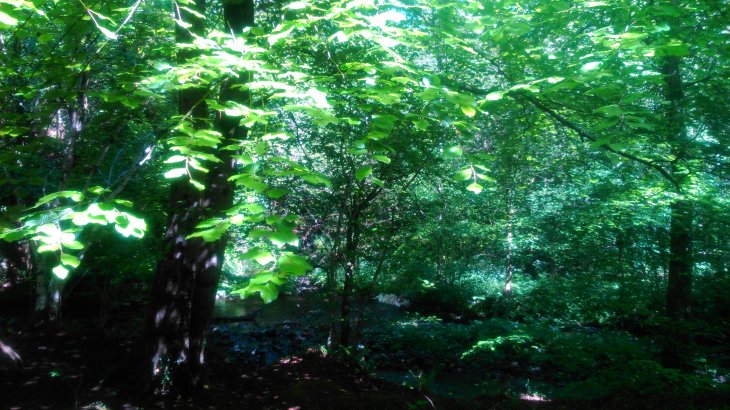
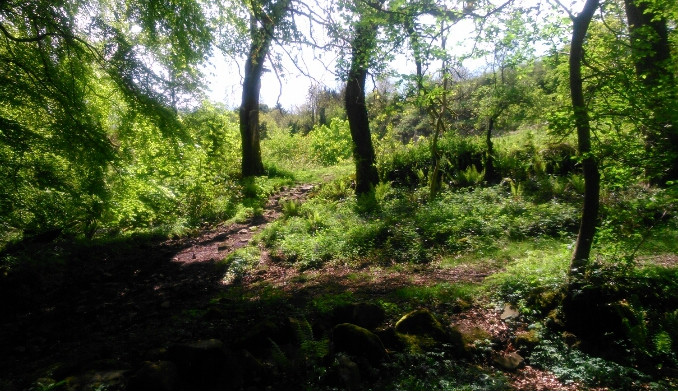
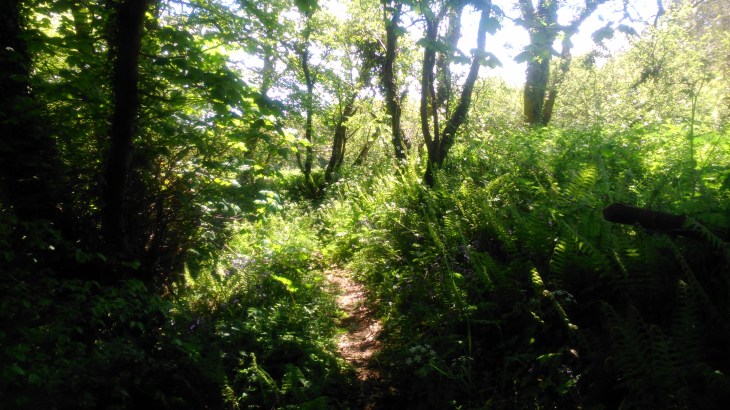
This is not only a gem of a walk right in the city of Belfast  but also gives easy access to the mountains and much longer treks, for example, Black Mountain to Cavehill.  However, it is a muddy one and there are a couple of streams to cross.  If you like getting really close to mother nature, then this is the one for you.  For a map, statistics and waymark photographs, click on the link to Wikiloc:

http://www.wikiloc.com/wikiloc/view.do?id=13407236

Colin Glen 2

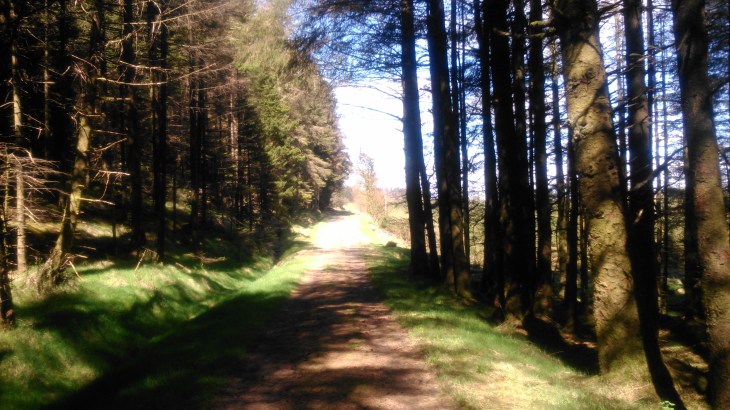
We started at the Colin Glen Centre at 163 Stewartstown Road and followed the main path always keeping to the right, along the river, until we reached the bridge at the Glen Road.  We passed under the bridge and climbed up the steps on the right and then turned left to follow a smaller track beside the boundary wall.   Shortly after this path drops down to cross a river, there is a marker post taking you right and to a flooded quarry.

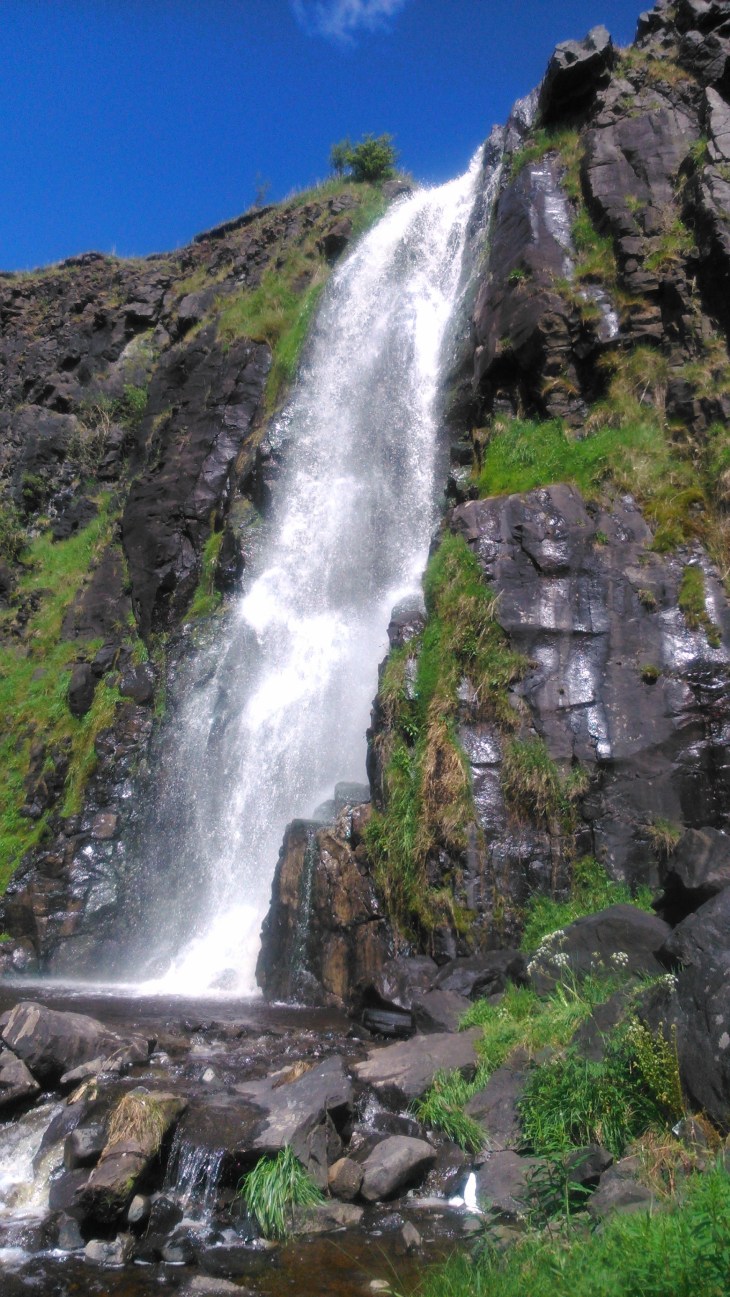
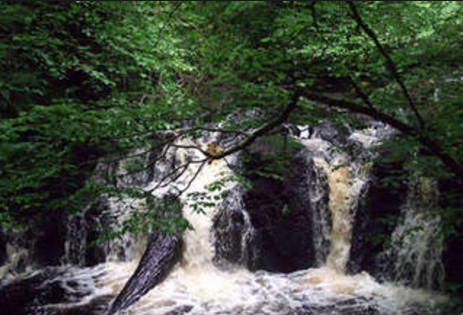
At this point, we had a choice to go right to reach Divis and Black Mountain or left to the continue Colin Glen Circuit to the Rumble Hole, an impressive waterfall.

Colin Glen 4

On this occasion, we went left and having enjoyed the delights of the Rumble Hole, we retraced our steps but kept straight rather than turning left to the quarry.  After some scrambling, we found the track on the other side of the glen.  This track brought us to a river crossing, then a climb up the slope on the far side to find the Mass Rock.

Colin Glen 8

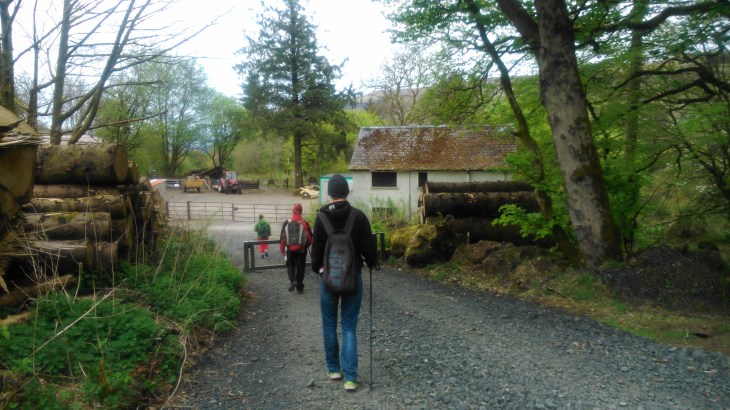
From the Mass Rock, we followed a track past some old industrial buildings and back to the Glen Road.  We turned left, entered Colin Glen Forest Park again and retraced our steps to the car park.

Colin Glen 7


Dungonnell and Glenariff Circuit

Glenariff

This is a beautiful 21 kilometres walk on minor roads and forest tracks.  For a map and statistics click on the link to Wikiloc:

id=13315442http://www.wikiloc.com/wikiloc/view.do?id=13315442

This walk starts in the village of Cargan which is on the A43 to Cushendall/Waterfoot. Park on Gortnageeragh Road, the first on the right as you enter the village.  Follow the road straight ahead, away from the village, to reach Dungonnell Road, where you turn left.  Follow Dungonnell Road past the dam and to the edge of Glenariff Forest Park.

Glenariff3

Enter the forest, at the first intersection turn right and continue along this track until you emerge into great views of Glenariff Glen

Glenariff2

(from Irish: Gleann Aireamh, meaning “valley of the ploughman/arable valley”) and  clearly marked signs for the Visitors’ Centre and the Waterfall Trail.

Glenariff1

Having enjoyed the waterfalls, return to the visitors centre and follow the signs for exit and the A43.  Cross the A43 and enter the forest again to follow a clear track, keeping left and crossing a small river, to emerge onto the  B14.  Turn right on the B14 (this is a busy road) and after a short distance, turn left uphill into the forest ( Aganlane).

Glenariff9

Turn left on the forest path and this will lead you to a minor road which will bring you full circuit back to Cargan


Tuatha Dé Danann

Tuatha Dé Danann

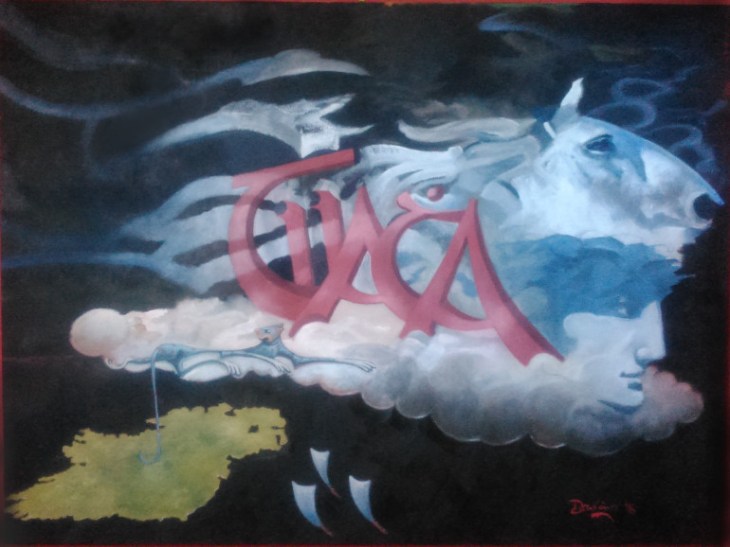
This is a painting called “Tuatha Dé Danann”.  It is oil on canvas, 1X1.5 metres and is the first of my Spanish/Irish connections.

The Tuatha Dé Danann (usually translated as “people of the goddess Danu”) are a supernatural race in Irish mythology.  They are thought to represent the main deities of pre-Christian Gaelic Ireland.  In ancient writings, they are depicted as kings, queens, and heroes of the distance past as well as fallen angels who were neither good nor evil.  They were a cool people and favoured dark clouds as a means of transport.  They were in possession of the island of Ireland when happened the Milesian invasion.  The Milesians came from the north-west of the Iberian Peninsula (present day Galicia and Northern Portugal).  After some tricky negotiations, the Milesians agreed to occupy the world above ground and the Tuatha, the world below, the underworld, where they live to this very day.

My painting shows the Tuatha travelling through the underworld.  The cat-like creature is taken from an illustration in the Book of Kells.  I am sure that if the Tuatha kept a pet, it would look like this.  The red letters spell out the word Tuatha in old Irish script and below is the island of Ireland.  The three sails hint that the Milesian invasion has begun.


Slieve Gullion Circuit

Slieve Gullion 2

This is a beautiful 14.5-kilometre walk, through the myths and mythology of Irish history, with witches and heroes, bottomless lakes, holy wells and rag trees. For details of the route see the map and click on the link to Wikiloc:

http://www.wikiloc.com/wikiloc/view.do?id=13261935

Slieve Gullion (from Irish: Sliabh gCuillinn) is a mountain in the south of County Armagh, Northern Ireland. The mountain is the heart of the Ring of Gullion, with an elevation of 573 metres (1,880 ft). At the summit is a small lake and two ancient burial cairns, one of which is the highest surviving passage graves in Ireland.

The walk starts and finishes in the car park adjacent to the Slieve Gullion Courtyard Centre in Slieve Gullion Forest Park. Follow the path uphill from the car park, passing the children’s play area on your left. The path continues uphill through deciduous woodland for about 1km until arriving at a log bench opposite a Ring of Gullion Way marker post. Turn right onto the forest drive and continue uphill through a stand of mature beech trees for 800m. Turn right onto a short section of forest track until the upper forest drive is reached. Turn left on the forest drive and continue along the southern slopes of Slieve Gullion for about 2km until an upper car parking area is reached on the left-hand side.

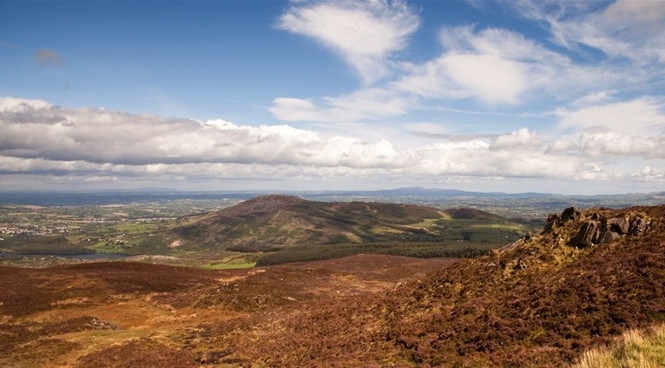
Turn right fifty metres beyond the parking area up an initially steep mountain path. Continue on over a stile until a stone shelter is reached. The views in this section expand to include the peaks of Slievenacapple and the Ring of Gullion to the North.

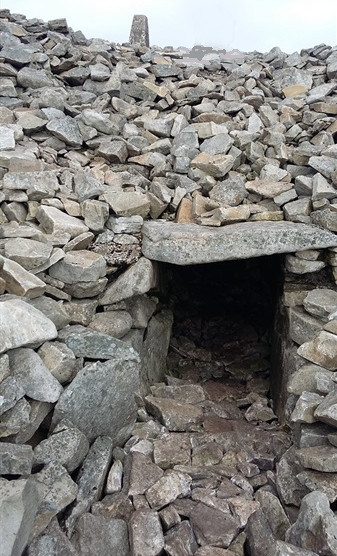
Passing to the right of the stone shelter the path becomes steeper, traversing areas of peaty and rocky ground. After 500 metres the path arrives at the summit of Slieve Gullion and the 5000-year-old Neolithic South Cairn Passage Grave, also known as the home of the Calliagh Berra.
Slieve Gullion 4

The tomb can be entered from just below the summit. Panoramic views from the summit take in the Mourne Mountains, Carlingford Lough, The Cooley Peninsula, the Armagh Drumlins and beyond.

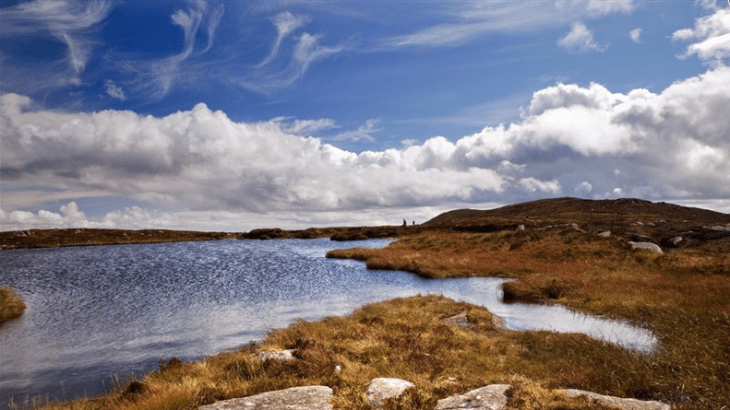
The path continues North-West along the summit plateau arriving at Calliagh Berras Lough after 800m.
Slieve Gullion 6

I met a local man who had explored the lough in an old-fashioned diving suit.  When he reached the end of his air hose, there was still a long way to go.  Nowadays, the lough is not only officially known as bottomless but, is also linked to the legendary hero Fionn mac Cumhaill. According to one tale, Áine and her sister Milucra both sought after Fionn . When Áine said she would never marry a man with grey hair, Milucra secretly put a spell on the lough, so that anyone who swam in it would emerge as an old person. She enticed him into the water, we are not sure how she did it but, in he went.  He emerged as an old man with grey-white hair. His men, the Fianna, forced her to give him a restorative potion from her cornucopia, but his hair did not return to its true colour.In some versions of the tale, Milucra is revealed to be the Cailleach Bhéirre, an ancient goddess.

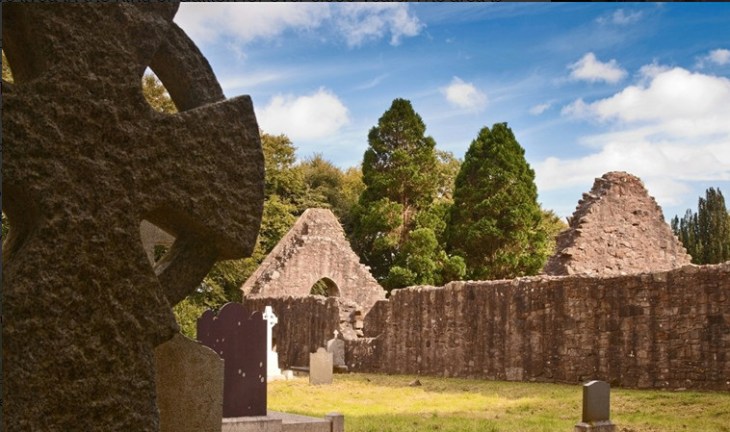
Continue past the lough to the North Cairn which is also a Bronze Age burial chamber.  Veer right after passing the North Cairn and continue on the path. Descend for about 2km down the North side of the mountain until reaching the Ballard Road. Turn right along the country lane and follow it as it undulates through the countryside. Keep right after 2km where the road forks and continue to Killevy Old Churches an ancient convent dating from the 5th Century. St Moninna is buried in the churchyard.
Slieve Gulluon 1

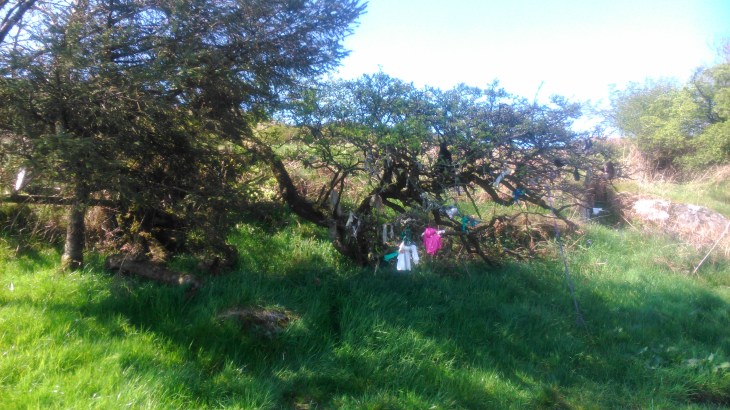
St Bline’s Holy Well is on the hillside above. There is a rag tree beside the well where you can hang your problems, in the form of a small piece of cloth and leave them behind.  These sites were not only known to early man but the tree, a fairy thorn,    also gives access to the underworld and the Tuatha Dé Danann.
Slieve Gullion 7

Continue along the country lane, past Clonlum South Cairn Portal Tomb on the left and Killevy Castle on the right for a further 2km before turning right at a crossroads. Continue through gateposts on to the exit drive from the courtyard centre and the car park.