Torremejía to Mérida – a kingfisher landed on my windowsill

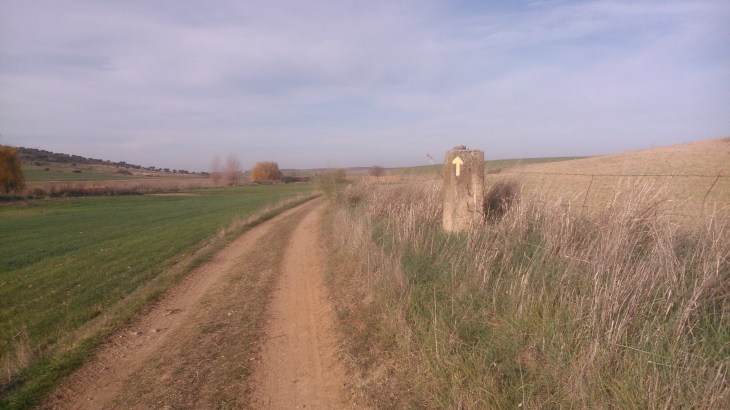
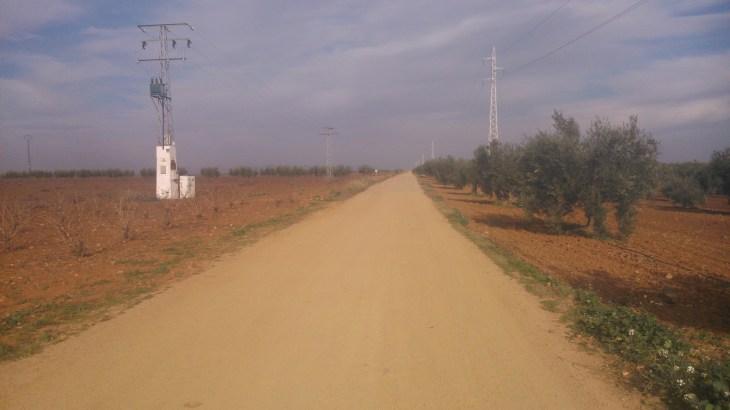
From Torremejía to Mérida is a straight run of 15 kilometres, along the road at first, but then on old gravel tracks to reach Mérida at the Roman bridge.

DSC_0149Mérida was a party town for the Romans and also a place to retire.  It is full of impressive remains, including the bridge, the circus, the amphitheatre and much more – well worh a visit.

DSC_0158.jpg

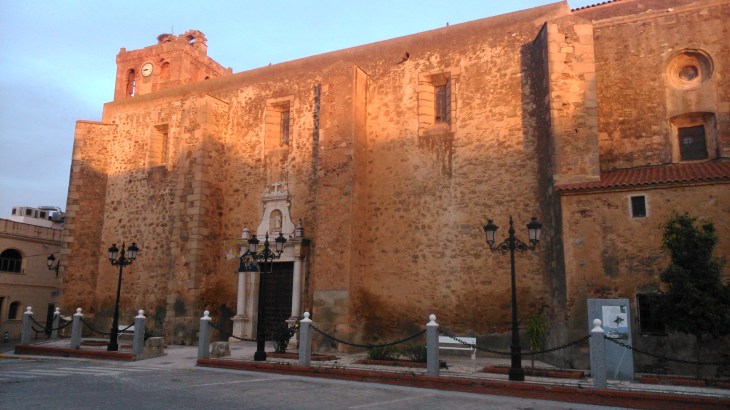
In the midst of all this magnificence, I was staying at the Albergue Municipal.  It is basic, but has everything you need.   It is based in a big old monastery,  which spans part of the river. To find it, simply turn left after you cross the Roman bridge, as you enter the town.

On the recommendation of the hospitalario, I ate at Casa Nano, family run and excellent food and value.

DSC_0152As I am writing this, a kingfisher landed on a branch, just at my windowsill.  He must use this as his fishing platform.  I have never seen one of these gorgeous little birds so close before.  He stayed for a few seconds and then, dived like a flash into the river, for his next catch.  I am going to think of him as a lucky omen for the rest of the journey and the exhibition.

DSC_0178.jpg

Mérida is the last stop on the first part of the journey.  I will complete the rest of the walk early next year.  I am meeting Gary tomorrow, and we will drive back to Seville and then down to Cadiz.  However, I will continue writing the blog and posting images, especially if I come across anything Tartessian.


Villafranca to Torremejía

DSC_0134.jpgThe walk from Villafranca to Torremejía was a long and dusty 29 kilometres but under glorious blue skies.  Those of the fair skin take care, there is no shade and there are no villages in between, carrying food water is essential.
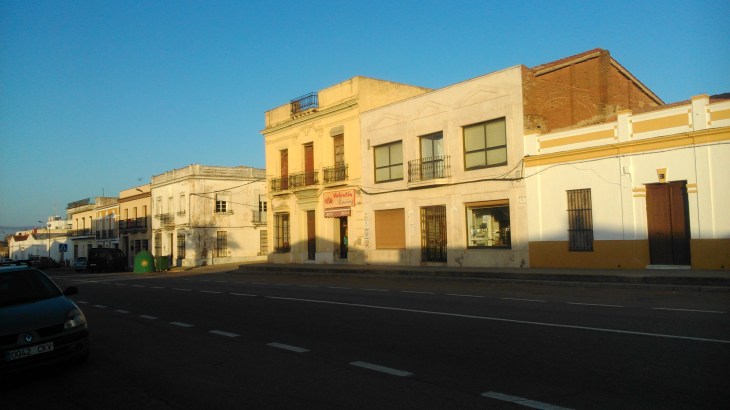
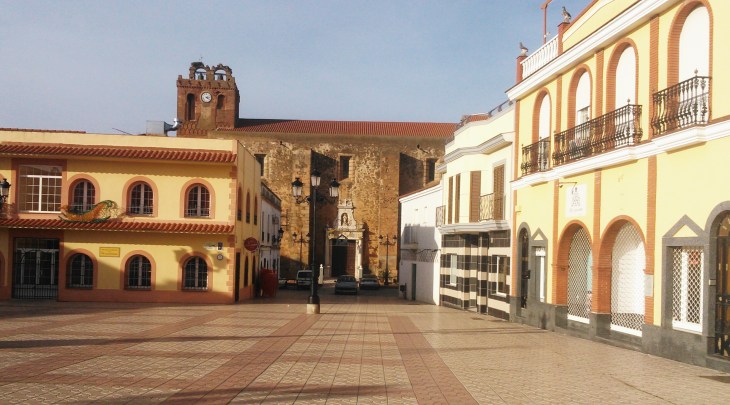
DSC_0138.jpgTorremejía has a touch of the wild west about it.  The main street is very broad, with a real jumble of architecture and the side streets shoot off at right angles, through long lines of anonymous white houses. However, everyone is very friendly and ready to help, if needed. It is a hard-working farming community.

When I arrived, it was Friday night and all were  out to have a good time – with the best  wine at 70 cents a glass who could blame them.  They yelled at each other up and down the bars, in ,what to me, was totally unintelligible Spanish and the caic was mighty.  However, don’t let them fool you, these people have great respect for peregrinos. They were really impressed to hear that I had come all the way from Ireland or, as they knew it, the land of constant drizzle.

DSC_0135.jpg

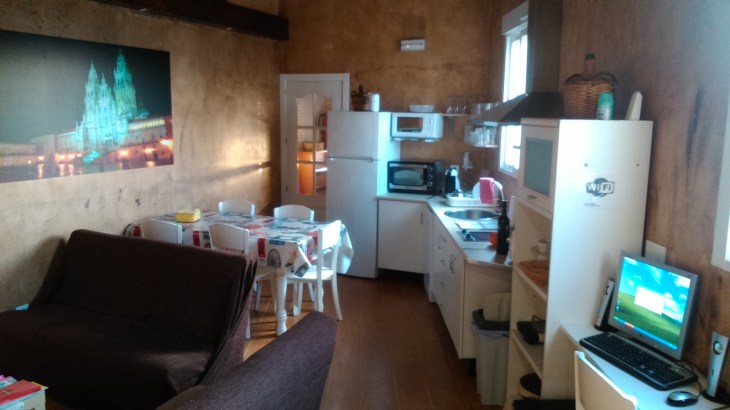
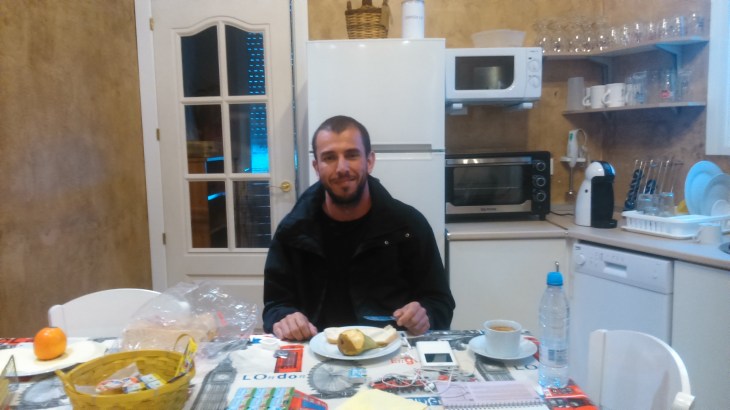
I stayed in the Albergue Turístico Municipal.  This is one of the government run hostals, some are good and some are very basic.  However, they all have bunk beds, hot showers, laundry, cooking facilities, and Wi-Fi and they are not expensive, perfect for the pilgrim on a budget.  This one is a beautiful and ancient building beside the Catholic church, at the end of town.  It costs €10 to stay for a night and €8 for a meal in the impressive dining room.

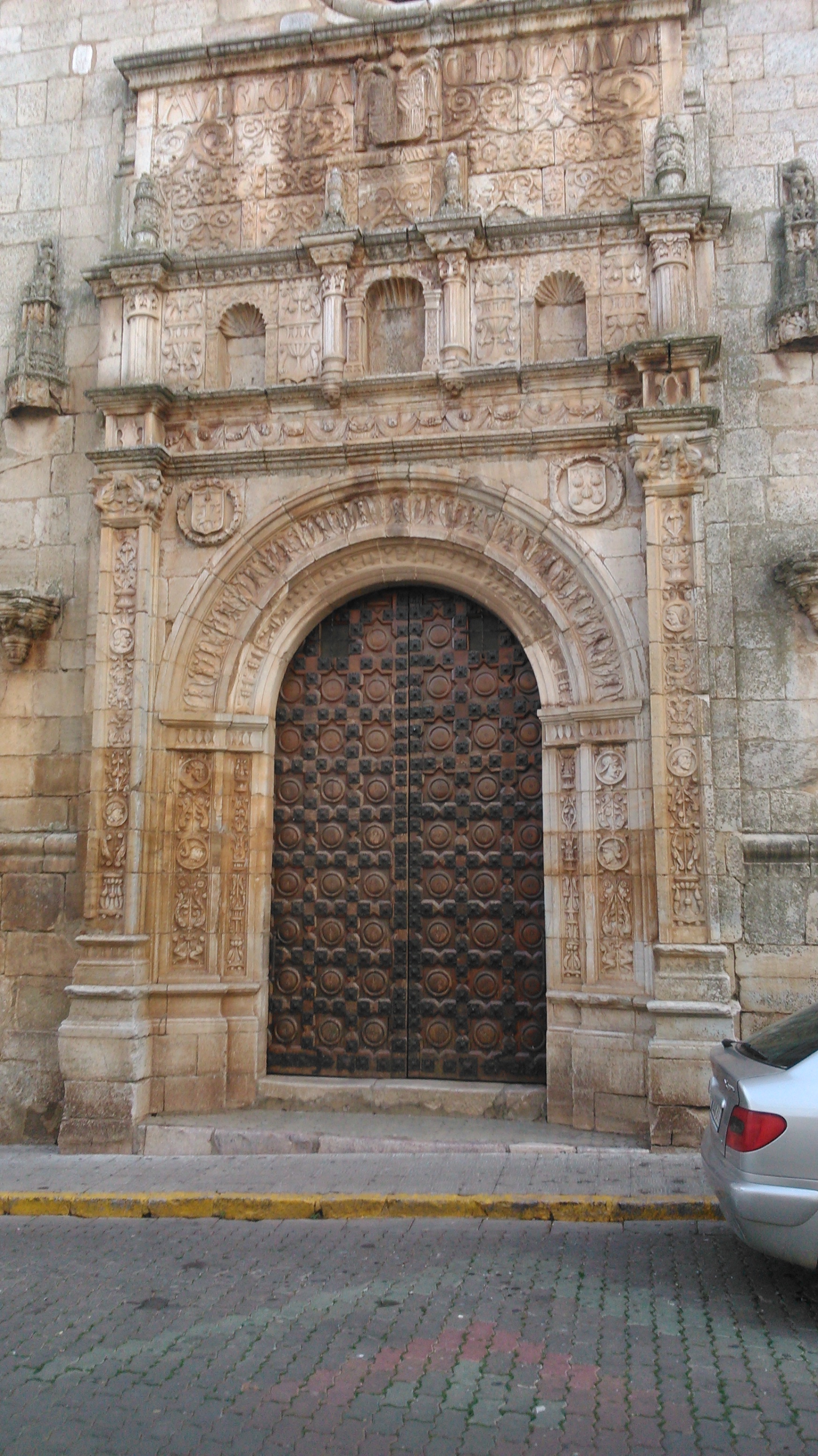
DSC_0136As I said, it is across the way from equally ancient Catholic church.  I noticed a lot of people going to evening mass.  Nowadays in Spain, this is far from the norm.  There is usually a gaggle of six to eight old ladies who spread themselves about, cat fashion, to give a clever impression of fullness.  Tonight was a different story.  It was a funeral mass and respects had to be paid.  At the end of mass, the bereaved family sat in front of the altar and everyone filed past.  They seemed surprised to see me, maybe not expecting people to travel so far.  However, I bowed ( as is the custom), they nodded ( as is the custom), and we all moved on with our lives.  A touching and charming way to offer condolencees and I  would expect nothing less from these sincere and genuine people.


Villafranca de los Barros

DSC_0127

I reached Villafranca about 3 and stopped at the first albergue on the old road coming into town – Albergue Turístico,  Las Caballeras,  €13 including a grandstand breakfast.  It opened in August this year and is very neat and clean with kitchen,  laundry,  lounge,  hot showers and hitec bunk beds.  The hospitalaria is called Rosaria and is very thoughtful and caring.   She lives in the house below with her son. Philippe (a policeman) and her grandson.

DSC_0129.jpg

I had the place to myself for a while but then, a footsore Brazilian called Julian arrived.  Later, the family called up for a visit.  Rosaria told us the sad story of how her young husband had died of AIDS contracted during a blood transfusion in La Paz Hospital,  Madrid, in the 1980’s.  However,  her son Philippe was fit and well and ran the Camino with a team-the local sport.   His son, also Philippe,  was celebrating his eigth birthday and looked up briefly from his presents to acknowledge our congratulations (¡felicidades!).  He is a member of the junior running team.

After they left, I introduced Julian to John Ross’s fine bottle of red – they were happy to meet. We then started to put the world to rights.  Brazil, it turns out.  is a very dangerous country where you can get shot outside your front door for your  small change.  The government has little intention and less ability to stop the destruction of the rain forest and turns a blind eye to global warming.  Her in Extremadura, we should be the rainy season, getting ready for planting in the spring.   Instead, it is hot and dry with the soil turning to dust.   It makes Ireland look like a green and pleasant land.

DSC_0120


Villafranca de Los Barros to Torremejía Along the Roman Road

DSC_0134


It’s a fine thing to step out on a Friday morning in December with 29 kilometres of Roman road stretching in front of you and nothing to do all day but walk it and enjoy it.  At first the usual jumble of thoughts rattle around in your head.  However,  after a while, it becomes a mindful experience and you just listen to each footstep crunching on the gravel and you start to enjoy life moment by moment.

There is not only one Roman road but a whole series of them, all well used by the local farmers.  It’s as if the Romans never left.

DSC_0132.jpg


Puebla de Sancho Pérez to Villafranca and a Chance Encounter

DSC_0120.jpg

I left Puebla de Sancho Pérez about 8.30 after an excellent night in the hostal El Monte.  I had intended to head for Zafra, but there was an alternative route which took me to a beautiful village called Los Santos de Maimona.

DSC_0122.jpg


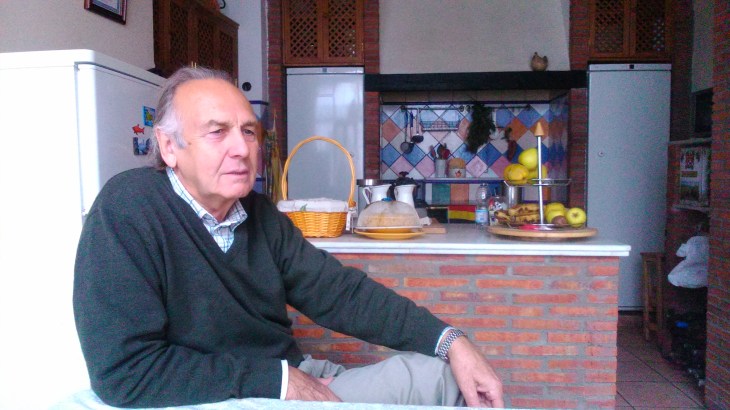
In the middle of the village, I met an English man called John Ross. John is a very sprightly 75 year old,  looking no where near his age.  He has lived in Los Santos for 25 years, with his Spanish wife and two sons.  He invited me back for coffee and biscuits and showed me around his wonderful  home.

DSC_0123

John is known locally as the “Last Caballero “, because of his impeccable manners and winning smile.   Before leaving,  John insisted on cramping a bottle of wine into my rucksack,  on the understanding that it was a ‘good one’.  Well John, if you are reading this,  thank you again for your hospitality and, rest assured,  it was a ‘good one ‘

DSC_0124.jpg

John then walked some distance with me along the Camino and we discussed local and national politics.  However,  more of politics later.  The elections are on Sunday and it’s getting heavy!  Someone punched the president last night but he is so slippery,  everyone thinks it was staged for television.

I reached Villafranca de Los Barros about 3.  I stopped at the first hostal on the old road as you come into town – Hostal de Las Caballeras €10.  This is an excellent place with a very friendly hospitalaria.

Tomorrow 25 kilometres along a Roman road.


El Zaguán de la Plata – Tartessos

Fuente de Cantos is a typical pueblo of Extremadura but, I can’t stress enough the pleasures of staying in hostal El Zaguán de la Plata.  It is a wonderful big house with great rooms, patios,  gardens,  and outhouses which go on forever -a steal at €15 including breakfast.

The hospitalario,  Antonio, is a mine of information.  We fell  to talking about local history with Massimo who,  being Italian, thought that the Romans were the bees’ knees. Then, Antonio, to my amazement,  mentioned the Tartessians, as a very significant people in the pre-roman history of Extremadura. He pointed out the, thought to be, location of Tartessos on a map ( near Cadiz).  He casually mentioned, that there are three villages, in the very remote mountains of Extremadura,  near the Portuguese border,  where, they speak a strange language, thought to be related to ancient Tartessian.

Each village,  has it’s own dialect, each one, unintelligible to the other. ¡Gracias Antonio! The game is a foot!  This is pure Myles na gCopaleen, but if you feel like a big hike, the villages are called San Martin de Treveio, Eljas. and Valverde del Fresco.  They are all available on Google maps but not on Google translate.

IMG_20151216_190309Today, I reached Puebla de Sancho Pérez, after a beautiful 20 kilometre walk through open countryside on,  traffic free,  old roads.
 

Camino de Santiago(Via de Plata) Migas of Extremadura

DSC_0100.jpgI had no problems following the Camino out of Real de La Jara.  I simply walked to the end the village and picked up the old dirt road which had once been guarded by a mighty castle.  The road snaked through the beautiful Parque Natural for 12 kilometres and, where it met the new road, there was a café with good food.  The final 10 kilometres were not so great, close to the main road.  I got into Monesterio about 2.

The first building in Monesterio is the Turismo.  They were very keen to furnish me with maps but, sadly informed me that the Ham Museum ( El Museo de Jamon) was closed.  They like to keep in step with the Louvre and all the international museums, hence closed Monday. I had fancied getting more information on those dark and hairy princesses I have been keeping company with along the way, and maybe a nibble at one or two, to boot.  This news threw me back on my own devices – how to punch in an afernoon in Monesterio.

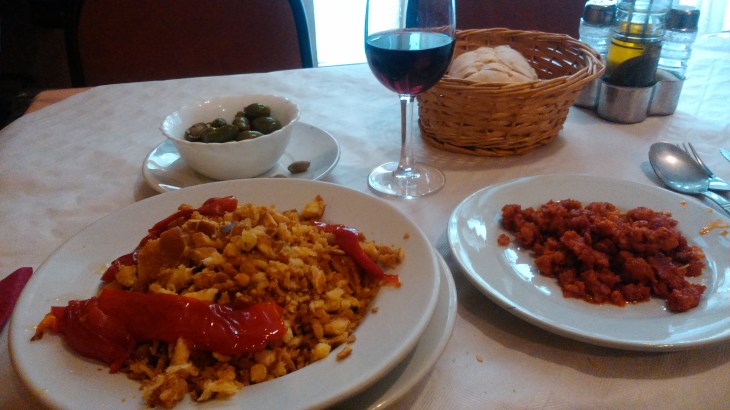
Dan The Turismo were able to recommend Hostal Pilar, €29 for a good single, a full meal and breakfast the next morning.  The comedor ( dining room) is just across the street.  They have an excellent menu del día and the waiter recommended migas, followed by riñones, washed down with a glass of local red ( see photos).  As they are all three specialities of the area, they would serve to celebrate my safe arrival in Extremadura. Fate then took a twist in my favour.  I discovered that the excellent local wine is only €1 per glass ( see photo of half empty bottle).  The afternoon slipped in rightly.  Fuentes de Cantos tomorrow 22 kilometres.

Have I Found Tartessos?

In Castilblanco, I stayed in the five star Castillo Blanco Hotel.  I know that this smacks of Camino lite, but it was the only option and a mere €25 for the peregrino.  Breakfast this morning consisted of a mountain of tostadas and all the coffee you can shake a stick at.  As I was getting in the carbs, I watched the television news. I got my first whiff of Tartessos.  It was being presented, in turn, by two goddesses Pilar and Maribel.  Pilar was blond with piercing blue eyes while, Maribel was drifting towards the strawberry blonde, with bottomless green eyes.  Pilar was speaking while Maribel stared in admiration.  Maribel’s body language was saying – Pilar you are so well informed about world events – but, in my opinion, her eyes were running naked through Pilar’s golden tresses screaming Celtic goddess.  I was tempted to wait and see if Pilar would return the compliment to Maribel but that Pilar, goddess she may be, she does love to hog the camera.

I left the goddesses to sort out the ways of the world. I had to make an early start, 30 kilometres,  mostly on road, but the final section through a very beautiful Parque Natural. My first port of call was to a small archaeological  site with, thought to  be, Tartessian aspirations.  This was strongly recommended to me as a ‘ must see’ by my landlady of two days ago in Guillena, Carmen.  Carmen really bought the Tartessian theory.  She said that the Andalusians felt more akin to the Celts than they did to some of  the other peoples in Spain,  especially looking north east.

The site was as disappointing as a pile of rocks can be, but I felt that, between the goddesses and Carmen, I was getting a sniff of Tartessos.  When I got back to the Camino, I met Herman.  Herman is a Belgian who is walking with his father Franc.  Franc is seventy-five years old but looks about fifty.  Nevertheless, he very wisely decided,  to take a taxi to the gates of the Parque Natural and walk the last 15 kilometres.  Herman and I were walking and talking when the taxi came back.  The driver explained that the Parque Natural was closed for hunting season and rather than having the father, Franc, hunted down like a dog in the Parque Natural, he had left him on the main road to walk safely into to town.  Ok, he didn’t use those words but I could read it in his eyes – dark brown, incidentally, not a whisper of Celtic goddess.  More from Tartessos later. In the meantime, I will continue to post photos on my Facebook page which should roughly correspond with the blog.

The First Day -Seville to Guillena

I arrived in Seville yesterday, 9th December, after a long day’s travelling. I stayed in Hostal Nuevo Suizo, just off the Calle Sierpes, right in the centre of town, and what it lacks in hot water it makes up for in atmosphere and friendly staff. If you like your hotels dripping in Gothic charm and don’t shower too often, it’s the place for you.

The first stage of the Via de Plata is from the cathedral in Seville to Guillena, a village 23 kilometres away. However, I had heard various reports alluding to ‘problems’, especially for lone walkers, between the outskirts of Seville and a village called Camas – the usual big city stuff. A very helpful lady in the tourist office advised me to simply take the bus to the next village after Camas, Santiponce, on a ‘just in case there are any of them bad boys about’ basis, and carry on from there. This turned out to be excellent advice. The bus leaves from the main bus station in the Plaza de Armas, platform 41 at the very end and it’s a local, so you pay on the bus – €1.50. After 35 minutes, it drops you off in the beautiful village of Santiponce, where you can visit both the Monasterio de San Isidoro and the ruins of Italica, where Hadrian (the wall man) was born.

The Camino continues through the village, along the road at first, but then, on a wonderful track across open fields, all the way to Guillena. It was a beautiful sunny day and even though it is December, sun cream, hat and sunglasses are still strongly recommended – we have come a long way from Tartessos. I am staying in a hostal called ‘Luz del Camino’. It is on the main street as you come in to town and is owned by a very interesting lady called Carmen. Her phone number is on the door and she comes running when you phone – it’s worth having a Spanish simm. Carmen is a camino enthusiast and appears to have walked them all, all over the world. She is very much into the mindfulness aspect of long distance walking-but more of that later. The house has everything and I have it all to myself for €12 – the washing is on as we speak.

Tomorrow – 20 kilometres to Castilblanco de los Arroyos.